First, the definition
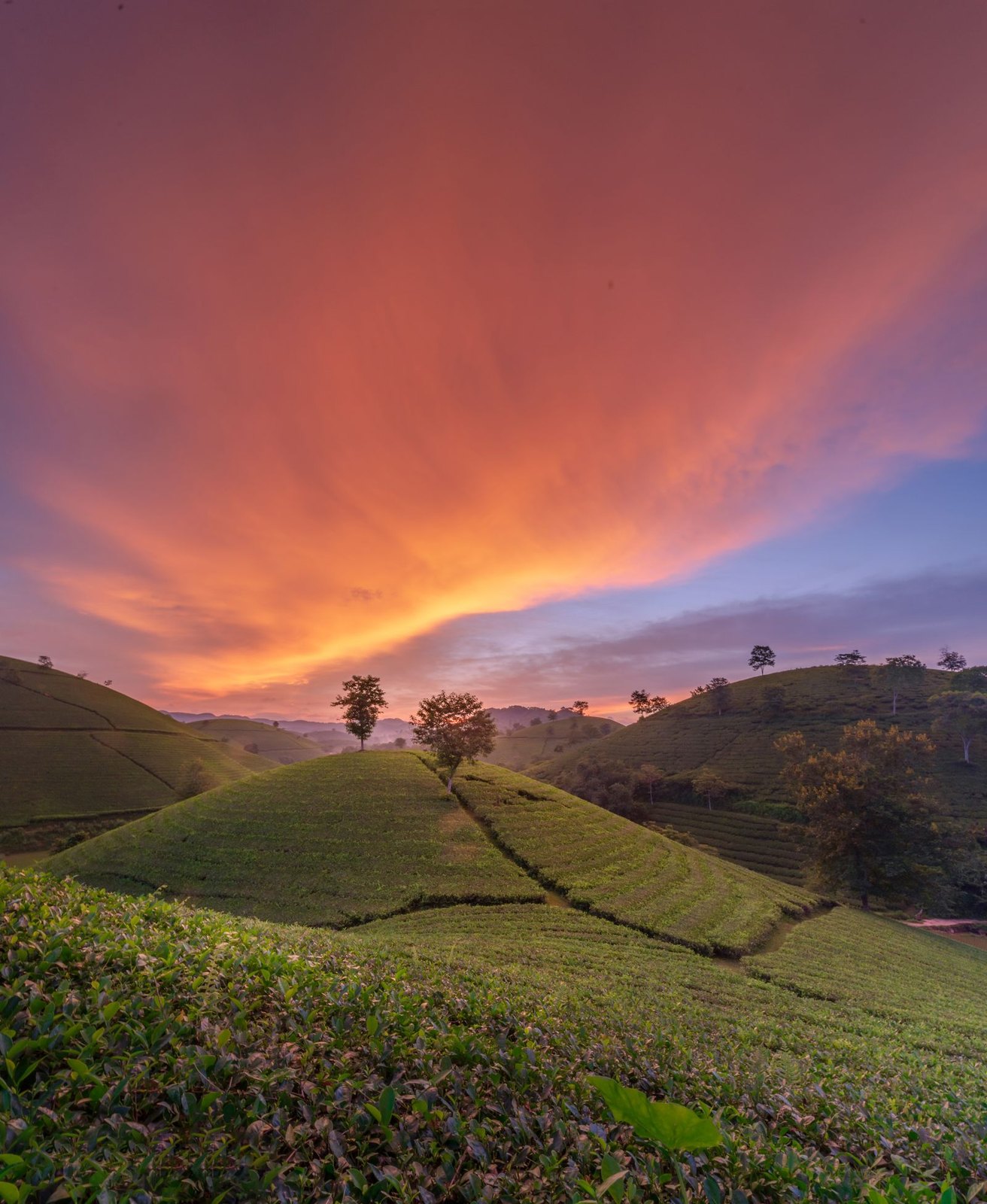
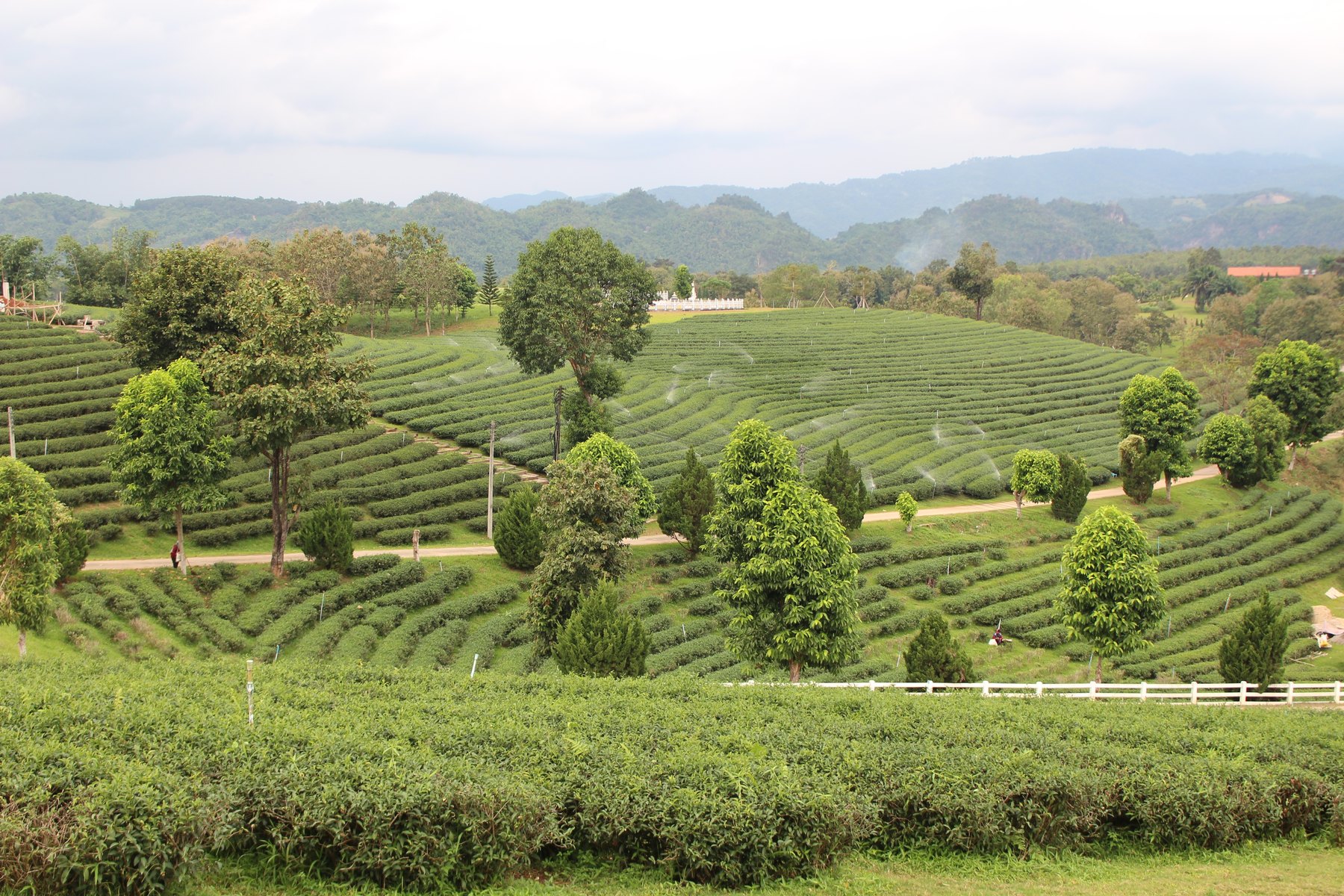
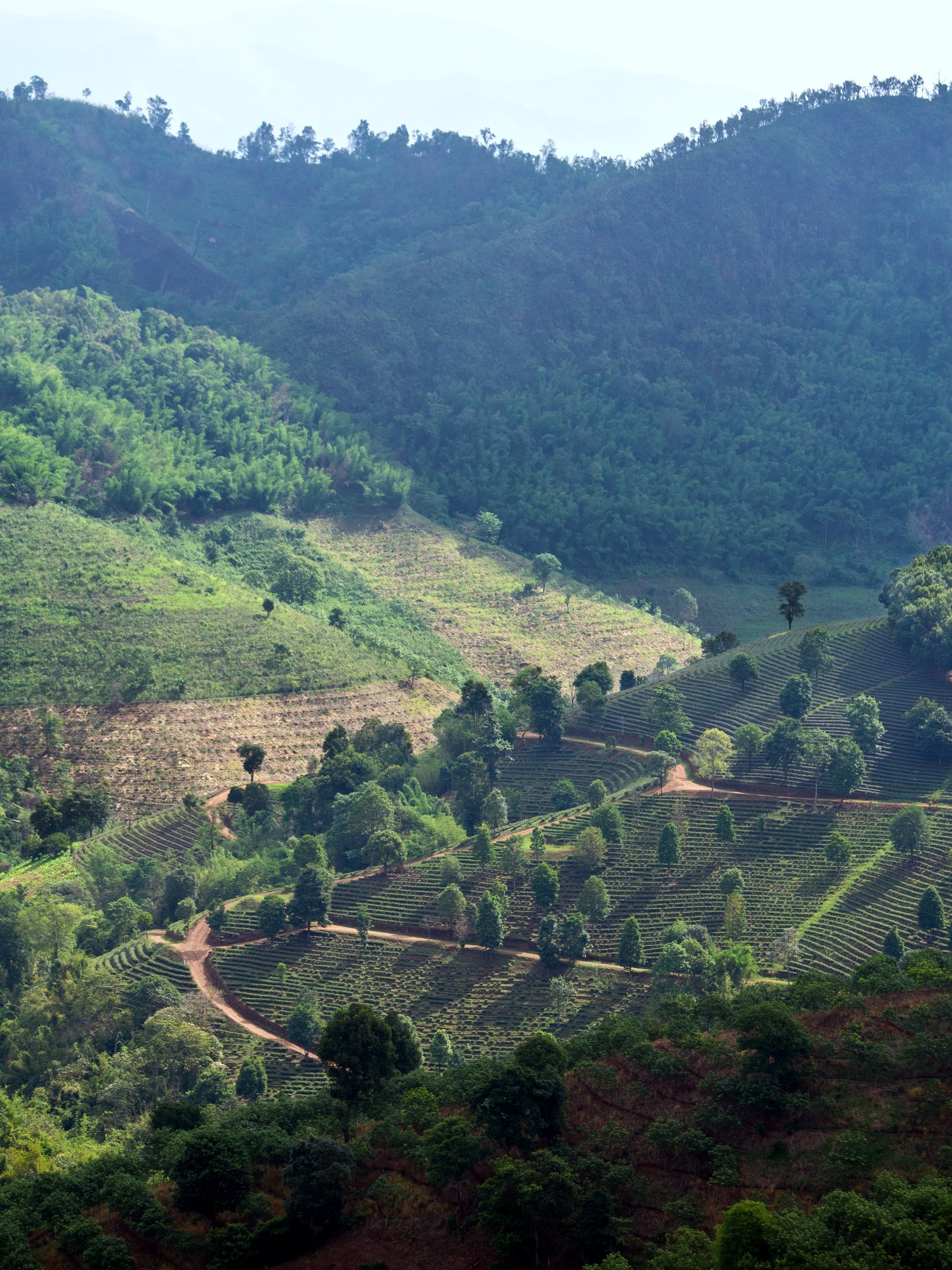
“Doi Mae Salong oolong” is a place plus tea type, not a cultivar and not a grade. It refers to oolong made in the highlands around Doi Mae Salong, officially known as Santikhiri, in Chiang Rai province, northern Thailand.
One bag under that name may be Jin Xuan, another Ruan Zhi, another Four Seasons or a local large-leaf plant. One may be lightly oxidised and floral; another may be honeyed, roasted or made as a red oolong close to black tea. The place name tells you where the tea comes from. It does not tell you what is in the bag.
| Item | Detail |
|---|---|
| Name | Doi Mae Salong Oolong |
| Type | Place-based oolong style, not a cultivar or grade |
| Location | Doi Mae Salong / Santikhiri, Chiang Rai, Thailand |
| Altitude | Common tea gardens around 1,200–1,800 m |
| Main cultivars | Jin Xuan (TTES No.12), Ruan Zhi (TTES No.17), Four Seasons, Qingxin and local large-leaf types |
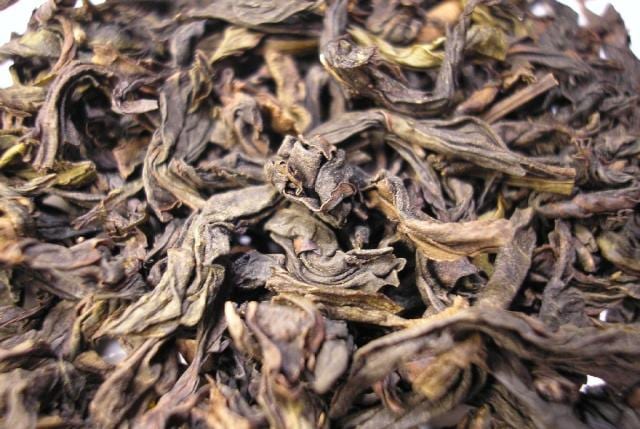
| Processing | Sun-withering, oxidation, rolling, roasting; oxidation level varies by product |
From opium to oolong
The modern history of Mae Salong is not a pastoral tea story. In the early 1950s and around 1961, remnants of the Chinese Kuomintang 93rd Division crossed from Burma into northern Thailand and settled in the border highlands. During the 1960s and 1970s the area was part of the Golden Triangle opium economy, and life was unstable.
From the 1980s, Thai royal projects and other agricultural programmes promoted legal highland crops. Tea became one of the most visible replacements. In 1994, growers brought Taiwanese oolong cultivars from the Alishan area — notably Oolong No.17 and Oolong No.12 — and the local tea industry took its present shape.
That transition was not a single, tidy “royal project replaced opium with tea” story. It involved alternative crops, roads, extension work, market access, border governance and a great deal of trial and error. Tea is the most photographed result, not the whole history.
Why Taiwanese cultivars dominate
Mae Salong’s highland climate resembles Taiwan’s Alishan tea districts: elevation, cool nights, mist, slow growth and a marked seasonal rhythm. Taiwanese cultivars performed well, and local producers often use the breeding numbers rather than marketing names.
- Oolong No.12 / Jin Xuan: often creamy, floral and soft, with a natural milky impression when the process supports it.
- Oolong No.17 / Ruan Zhi: fragrant and refined, often orchid-like, with a clean, sweet finish.
- Four Seasons / Si Ji Chun: high aroma, reliable yield, common as an everyday oolong.
- Qingxin and local large-leaf types: used for lighter oolong, red oolong or black tea depending on the maker.
A cultivar is not a guarantee. The same Jin Xuan can be green and floral, honeyed, roasted or nearly black. Processing decides the cup.
Flavor range
Mae Salong oolong is easiest to understand as a spectrum:
- Light and floral: orchid, gardenia, fresh greens; pale gold liquor; delicate body.
- Milky / creamy: Jin Xuan’s soft texture and coconut-cream impression, though not every batch shows it.
- Honeyed / fruity: riper oxidation brings honey, stone fruit and a rounder body.
- Roasted: toasted nuts, caramel, wood and a longer finish; the liquor moves toward amber.
- Red oolong: a heavily oxidised style with dried fruit, honey and malt, closer to black tea.
The through-line is usually a soft, aromatic cup with moderate astringency. The variation is the point: “Mae Salong oolong” is not one flavor.
Brewing
For a 150 ml gaiwan or small pot, use about 5 g of leaf.
- Water: 90–95°C. Use 90°C for a light floral style, 95°C for a roasted one.
- First infusions: 20–30 seconds, then add 5–10 seconds each round.
- Expect five to seven good infusions. Rolled oolong needs a little time to open; don’t judge it on the first ten seconds.
If the cup turns bitter, lower the temperature or shorten the steep before adding more leaf.
Buying
- Ask for the cultivar. Jin Xuan, Ruan Zhi or Four Seasons tells you more than “Mae Salong oolong.”
- Ask about oxidation and roast. Light floral, honeyed and roasted are different products.
- Ask about harvest. Spring and winter usually bring finer aroma; summer can be fuller but coarser.
- Ask who made it. Mae Salong is a place, not a brand. The producer and lot matter.
Common misreadings
“Mae Salong oolong is a cultivar.”
No. It is a place-based category that can contain several cultivars.
“Mae Salong oolong always tastes milky.”
The creamy note is mainly a Jin Xuan trait and process result, not a universal local flavor.
“All Mae Salong tea is royal-project tea.”
Royal projects helped create the industry. Many gardens, factories and brands are private. Judge the specific producer.
One line
Doi Mae Salong oolong is a highland tea style with a layered history: KMT settlement, opium replacement, Taiwanese cultivars and Thai processing. It deserves better than a single “Thai highland tea” label.