What it is: a regional green tea from volcanic highlands, not a single brand
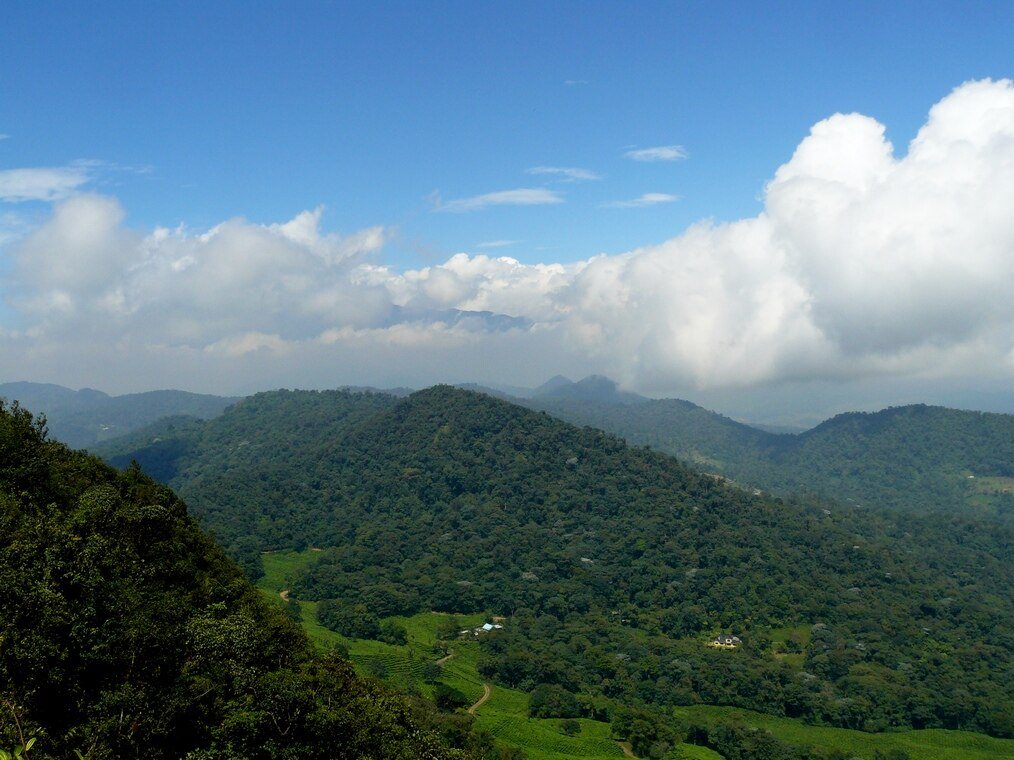
“Hawaii volcano green tea” usually refers to green tea grown on the volcanic highlands of Hawaiʻi Island, especially around Volcano near the Kilauea summit (about 4,000 ft) and the north-east slope of Mauna Loa (about 3,000 ft). It is a regional category, not a single brand and not a protected geographical indication.
The category has three boundaries:
- Not all Hawaiian tea comes from volcanic highlands. Hawaiʻi also has lower-elevation gardens, gardens on other islands, and products made with different processes.
- Not all “volcano green tea” uses one process. Hawaiian green tea can be steamed, pan-fired, hand-fired or machine-processed, depending on the producer.
- Not all volcanic-ash soil produces the same “mineral” taste. Soil is one part of terroir; cultivar, elevation, fog, picking and processing also matter.
History: introduced in 1887, systematic trials in 1999–2001
The University of Hawaiʻi CTAHR extension publication says tea was introduced to Hawaiʻi in 1887. There were scattered planting attempts afterwards, but no large commercial industry. The systematic trials began in 1999–2001, when USDA/ARS and UH CTAHR planted 0.5 acre at each of three elevations:
- Waiakea, 600 ft;
- Mealani, 2,800 ft;
- Volcano, 4,000 ft.
The trials found that Mealani and Volcano produced excellent green and oolong tea; Volcano's light fog helped; and no insecticides or fungicides were used for three years. The publication also gives the crop's range: sea level to 6,000 ft, with a preferred soil pH of 4.5–5.0.
That history matters. “Hawaii volcano green tea” is not a 19th-century commercial tradition; it is a modern small-scale industry that began with late-1990s trials. 1887 is the introduction date, not the industry's start.
Volcano, 4,000 ft: gardens around the Kilauea summit
The Volcano area sits near the Kilauea summit at about 4,000 ft, cooler and foggier than the low-elevation gardens. Documented cases include:
Volcano Winery. Its official page says the tea garden is at 4,000 ft near the Kilauea summit; cuttings came from USDA and UH Hilo tea fields in 2005, were planted in 2006, and reached one acre by 2011; the farm makes black and white tea. The page also gives a single-product figure: its green tea is listed at 20–30 mg caffeine per 6 oz. In 2015, its white tea placed first and third in the commercial section of the US Tea Growers competition. The caffeine figure is one farm's product data, not a statewide standard.
Tea Hawaii. The HIAP page says Tea Hawaii is in Volcano Village, at 4,000 ft near the Kilauea summit, uses native-forest agroforestry, makes Hawaii-character teas and provides public education. The emphasis is on growing tea inside native forest, not clearing the land for a monoculture.
Volcano's advantage is elevation and fog, not “live volcanic gas directly flavouring the tea”. Tea roots take up mineral ions from the soil solution, not volcanic gases. Treating volcanic activity itself as the flavour source romanticises the terroir.
Mauna Loa, 3,000 ft: Big Island Tea's small-batch handmade tea
Big Island Tea's official account says the farm was founded in 2001; the garden is at about 3,000 ft on the north-east slope of Mauna Loa; the soil is described as about 400-year-old volcanic ash; the farm makes single-batch whole-leaf green and black tea; leaves are hand-picked one bud and two leaves, hand-fired and hand-rolled in small batches.
This path differs from Volcano Winery: it emphasises single batches, whole leaf, hand firing and hand rolling, not larger-scale mechanical production. Its “volcano” label comes from the volcanic-ash slope where the garden sits, not from an additive or a flavouring.
Big Island Tea's output is very small, and the public page does not give an annual tonnage. Its value here is as a documented example of “volcanic highland plus handmade green tea”, not as a representative of the whole Hawaiian industry.
Processing and flavour: research says “excellent quality”, not one cupping table
The UH research judges Mealani and Volcano teas as excellent green and oolong material, but it does not provide a statewide cupping table. Volcano Winery gives white-tea awards and a green-tea caffeine figure; Big Island Tea describes single-batch, whole-leaf, hand-fire, hand-roll; Tea Hawaii describes native-forest agroforestry and education. Turning those sources into “all Hawaii volcano green tea has floral, fruity and mineral notes” is not supported.
A safer flavour framework:
- high elevation and fog can slow growth and keep the buds tender, which may contribute to finer aroma and lower astringency;
- hand firing and hand rolling affect leaf shape, liquor colour and aroma, but do not automatically create a fixed “mineral” taste;
- farms, cultivars, seasons and processes vary widely, so specific notes should come from the pack or an actual tasting;
- volcanic-ash soil's drainage, acidity and mineral background are terroir conditions, not a flavour guarantee.
If “volcanic mineral note” is used, it should be labelled a tasting description or marketing phrase, not a scientific conclusion.
Common misreadings
| Misreading | Problem | Better wording |
|---|---|---|
| “Volcanic minerals give the tea a unique mineral taste” | Soil minerals do not equal a fixed sensory profile, and no controlled cupping was found | “A possible tasting description”, not “a scientific conclusion” |
| “Hawaiʻi is the only tea-growing place in the United States” | The US has other tea areas and gardens | “A volcanic-highland tea area on Hawaiʻi Island” |
| “All Hawaiian green tea comes from volcanoes” | Hawaiʻi has low-elevation and other-island gardens | “Volcanic highlands are one production type” |
| “All Hawaiian green tea is pan-fired” | Steam, pan-fire, hand-fire and machine processing all exist | “Processing varies by producer” |
| “4,000 ft is the elevation of every garden” | The trials covered 600, 2,800 and 4,000 ft | Keep Waiakea, Mealani and Volcano separate |
| “Big Island Tea is the only tea farm” | Volcano Winery, Tea Hawaii and others also exist | “One documented case”, not “the only farm” |
Source boundary
This page confirms that tea was introduced to Hawaiʻi in 1887; that USDA/ARS and UH CTAHR planted 0.5 acre at Waiakea (600 ft), Mealani (2,800 ft) and Volcano (4,000 ft) in 1999–2001; that Mealani and Volcano produced excellent green and oolong tea; that Volcano's light fog helps; that tea can grow from sea level to 6,000 ft and prefers pH 4.5–5.0; that Big Island Tea was founded in 2001 and makes small-batch handmade green and black tea on a volcanic-ash garden at about 3,000 ft on Mauna Loa; that Volcano Winery is at about 4,000 ft near the Kilauea summit, took cuttings in 2005, planted in 2006, reached one acre by 2011 and makes black and white tea; and that Tea Hawaii works in native-forest agroforestry at Volcano Village.
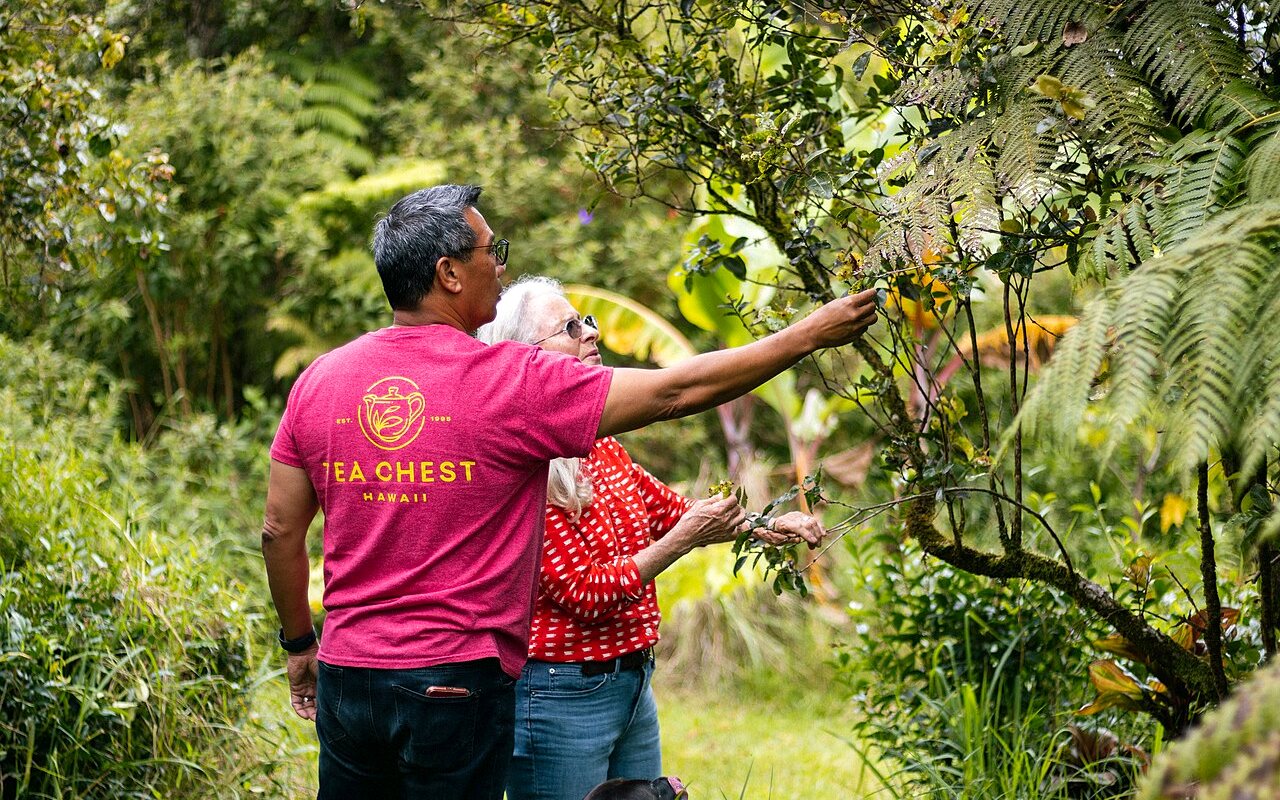
This page does not confirm statewide output, the total number of Hawaiian tea producers, a single cultivar ratio, a single processing specification, an official sensory standard, caffeine content for all products, or claims such as “volcanic mineral taste”, “the only tea-growing place in the United States” and “all Hawaiian green tea comes from volcanoes”. The page image is a farm-visit photograph at Big Island Tea, not a product shot and not a representative sample of the whole industry.