Extent
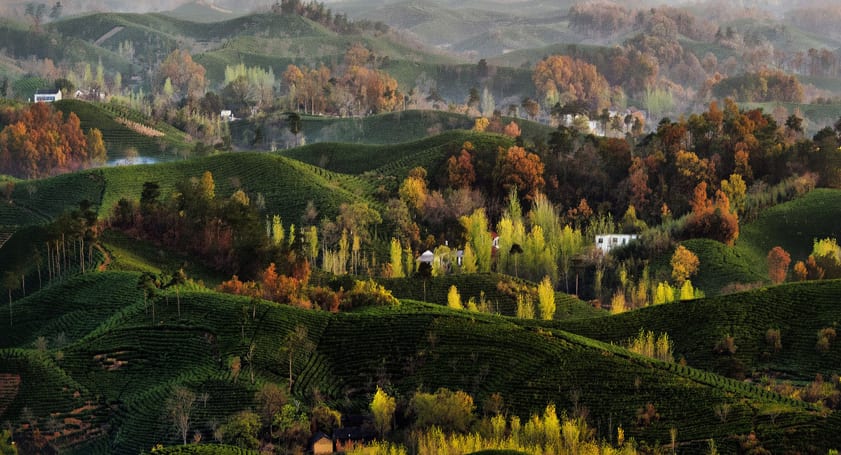
Xinyang lies in southern Henan on the upper Huai River and is Henan’s most important green-tea area. Shihe, Pingqiao, Luoshan, Guangshan and Shangcheng all have tea gardens; site and altitude create style differences. Xinyang Maojian is a protected product name, with its area defined by GB/T 22737-2008; not every garden in Xinyang automatically qualifies.
Environment
Xinyang sits in the climatic transition between north and south, with four distinct seasons, moderate rainfall and mountain mist and temperature differences that suit leaf growth. Yellow-brown soils and drainage affect roots and aroma. The growing season is shorter than in southern tea areas, making spring tea especially important; “Mingqian” and “Yuqian” are picking-time terms, not grades.
Cultivar and processing
Xinyang Maojian uses fine spring shoots, commonly one bud with one leaf or one bud with two leaves just opening. Traditional processing includes fixation, rolling, shaping, initial drying and re-drying. Shaping determines the fine, straight appearance; heat balances chestnut aroma and freshness. Hand and machine production coexist; fixation temperature, shaping passes and drying vary by factory and product.
Quality and flavour
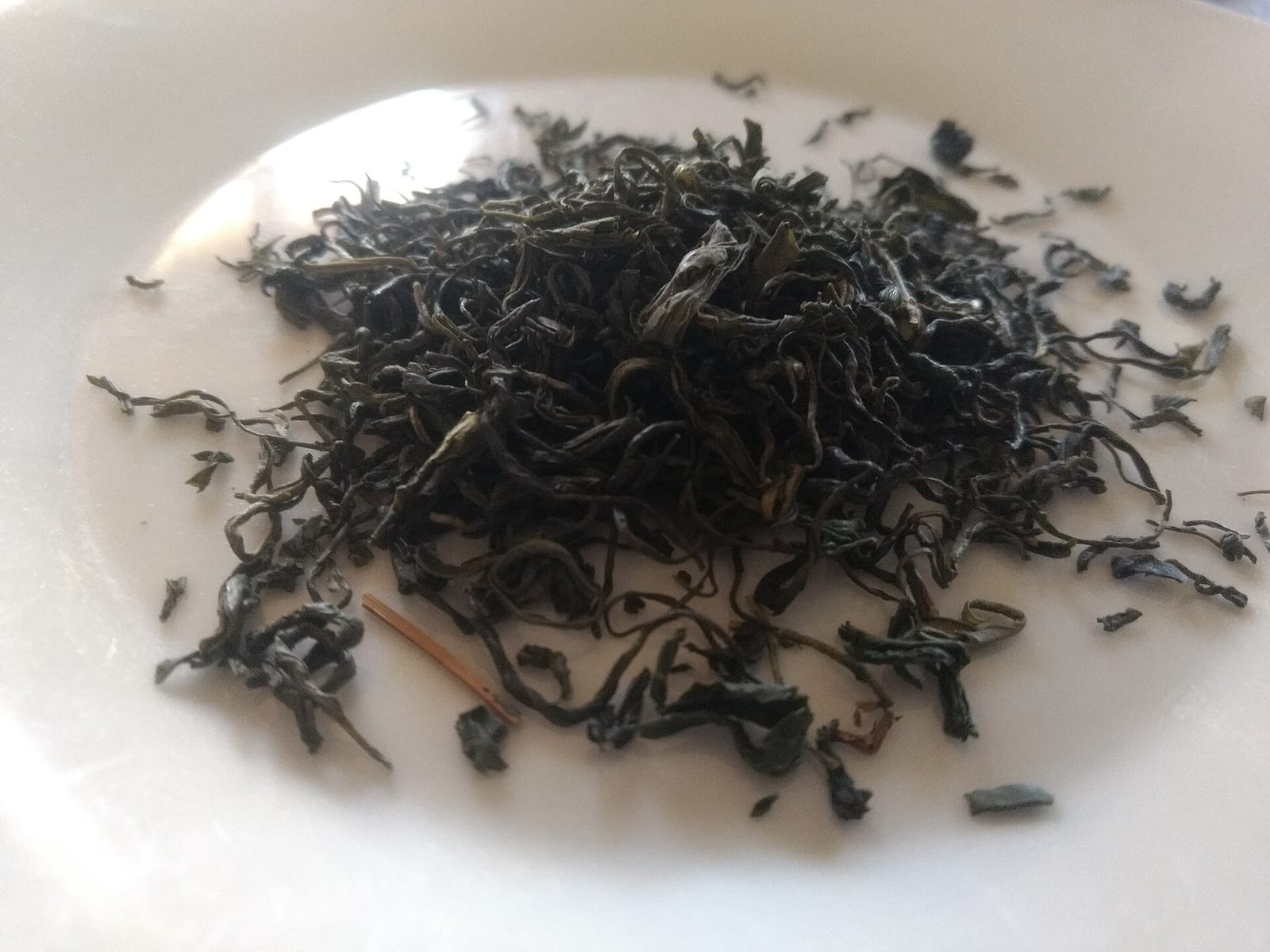
Dry leaves are fine and needle-like, green or dark green with visible down. The liquor is pale green and bright, with chestnut and fresh aromas and a refreshing, sweet finish. “Fine, round, glossy and straight” describes appearance, not grade; aroma, body, durability and storage also depend on origin, picking, processing and storage.
History and boundaries
Xinyang Maojian gained commercial repute in the late Qing and early Republic and became Henan’s representative green tea in the twentieth century. Specific origin dates, people and award narratives need checking against local gazetteers, archives and research. Xinyang Maojian processing is on China’s national intangible heritage list; GI protection and product standards should follow current announcements.
Common misconceptions
- Xinyang Maojian is not every Henan green tea. It is a protected product with origin and processing requirements.
- “Mingqian” is not automatically the highest grade. Early picking depends on cultivar, altitude and weather; grade also depends on material and processing.
- More down does not always mean better. Aroma, taste, colour and cleanliness matter equally.
- Hand-made is not automatically better than machine-made. Control and final quality matter.
Representative teas
- Xinyang Maojian: fine, tight needle shape, chestnut aroma and a fresh taste.
Sources
- GB/T 22737-2008 Geographical indication product — Xinyang Maojian tea — Current Chinese national standard for the protected area, grades, requirements, testing and labelling.