Extent
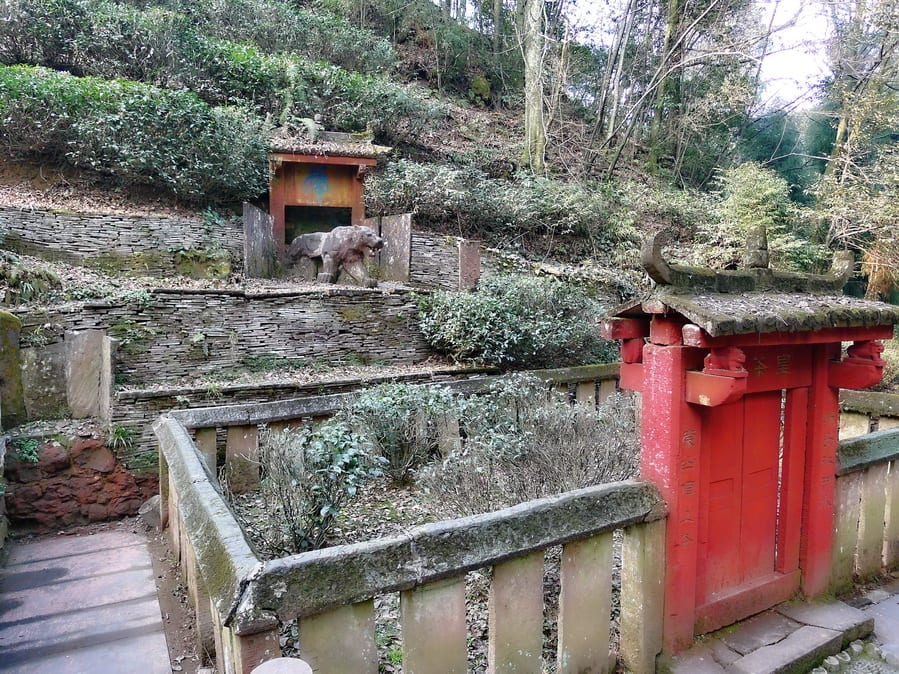
Mengding Mountain lies in Mingshan District, Ya’an, Sichuan, and is one of Sichuan’s best-known historic tea areas. Gardens are spread across the mountain and surrounding hills; Ya’an is also an important producer of South Road side tea and Tibetan tea. The Mengshan tea GI area is defined by GB/T 18665-2008; the scenic core, other gardens in Mingshan and the wider Ya’an tea area are not interchangeable.
Environment
Ya’an is known as the “rain city”: frequent rain and mist, yellow mountain soils and purple soils, with marked differences in drainage and sunlight. Mengding Mountain is not extremely high, but the humid climate and mist affect leaf tenderness and aroma. Altitude, mist and “immortal tea” stories cannot replace cultivar, picking and processing.
Products and processing
Mengding Ganlu is a pan-fired green tea with rolling, shaping and drying. Mengding Huangya adds a yellowing (menhuang) step and is a yellow tea under GB/T 21726-2018. Ya’an Tibetan tea belongs to the dark-tea system, with pile fermentation and pressing. These three show how one area can produce different tea families through different processing. Traditional Mengding Huangya is described as having multiple wrapping, yellowing and pan-firing cycles; the number and parameters vary by era and producer.
Quality and flavour
Mengding Ganlu is usually curly, with a fresh aroma and sweet taste. Mengding Huangya has golden, glossy buds, an apricot-yellow liquor, sweet and tender aromas and a softer taste. Ya’an Tibetan tea has a deep red liquor, a mellow body and possible woody, aged or pine-smoke notes. Product differences are large; “Mengding tea” alone does not describe them.
History and boundaries
Mengding tea appears in Tang records, and later generations tell tribute-tea stories; “water from the Yangtze, tea from Mengding” is a widely circulated saying. Claims such as “Wu Lizhen planted seven tea trees” and “all yellow tea comes from Mengding” are cultural narratives and promotional language; they should be checked against gazetteers, GI standards and research. Mengding tea processing is on China’s national intangible heritage list; protected areas and product standards follow current announcements.
Common misconceptions
- Mengding Ganlu, Mengding Huangya and Ya’an Tibetan tea are not the same tea. They belong to green, yellow and dark tea systems.
- “Mengding” is not all Ya’an tea. The GI has a specific protected area.
- Tea-ancestor legends are not historical evidence. Wu Lizhen and the seven trees are cultural narratives.
- “Tribute tea” is not a modern grade. Historical tribute narratives and today’s standards are different.
Representative teas
- Mengding Ganlu: a curled green tea, fresh and sweet.
- Mingshan Mengding Huangya: a yellow tea, softened by the menhuang step.
- Ya'an Tibetan tea: the south-road border-tea system, tied to frontier trade.
Sources
- GB/T 18665-2008 Geographical indication product — Mengshan tea — Chinese national standard for the protected area, classification and requirements of Mengshan tea.
- GB/T 21726-2018 Yellow tea — Chinese national standard for yellow-tea classification and quality requirements.