Scope
Sichuan lies where the eastern edge of the Qinghai–Tibet Plateau meets the Sichuan Basin. Tea gardens follow the basin rim, the southern hills and the upper Yangtze river system. In 2024 the province produced 454,000 tonnes of tea, up 6.9% year on year; tea gardens held stable at about 5.9 million mu, and the industry's annual comprehensive output value exceeded RMB 120 billion. Sichuan is one of the places where tea was first cultivated, and it is a composite producer of green, yellow, black, dark and jasmine teas. Mengding Ganlu, Mengding Huangya, Emei Zhuyeqing, Ya'an Tibetan tea, Yibin Chuanhong Gongfu, Bashan Quejian and Wenjun green tea each have their own origin and processing; "Sichuan green" is far too narrow a label.
Geography and terroir
The basin is framed by the Longmen, Qionglai, Emei, Micang and Daba mountains and the northern edge of the Yunnan–Guizhou Plateau. Inside are hills and plains; to the south are lower mountains and river valleys. The Jinsha, Min, Qingyi, Tuo and Yangtze rivers cut multiple valleys, and tea gardens often sit on slopes, terraces and intermontane basins between roughly 400 and 1,200 metres. The climate is subtropical humid monsoonal. The basin has warm winters and early springs; Yibin in southern Sichuan warms first, and early tea reaches market in early February. Ya'an is wet, misty and low in sunshine, and Mount Mengding is enclosed on three sides in a U-shape, split by a watershed into the Min and Qingyi drainage systems. Purple soils, yellow soils and mountain brown soils dominate; slope drainage, valley moisture and cloud mist are common terroir factors. Elevation, aspect and rainfall vary greatly between districts, and "high mountain and cloud mist" cannot replace garden management.
Main tea areas
- Ya'an–Mingshan–Mount Mengding: the core of Mengding Ganlu, Mengding Huangya and Ya'an Tibetan tea. In 2024 Ya'an had 1.0035 million mu of tea gardens, produced 121,000 tonnes of made tea and reached RMB 25.4 billion in comprehensive output value.
- Leshan–Emei–Jiajiang–Qianwei: Emei Zhuyeqing, Emei Maofeng, jasmine tea and export green tea. Leshan has about 1.4 million mu and 150,000 tonnes of output, roughly 23.7% and 30% of the provincial totals.
- Yibin–Junlian–Gaoxian–Gongxian: the core of Yibin early tea and Chuanhong Gongfu, with the earliest spring market. In 2025 Junlian produced 25,600 tonnes of made tea, with black-tea output and value among the province's leaders.
- Chengdu–Qionglai–Pujiang–Dujiangyan: Wenjun green tea, Qingcheng Xueya, Qionglai dark tea and jasmine tea, close to the Chengdu market.
- Guangyuan–Qingchuan–Wangcang: Qingchuan "White Leaf No. 1", Guangyuan yellow and green teas in the Qinba mountains. In 2025 Guangyuan had 500,000 mu, 22,300 tonnes and RMB 10 billion in comprehensive value.
- Bazhong–Dazhou–Nanchong: Bashan Quejian and Bazhong Yunding green teas on the southern slopes of the Micang and Daba mountains.
Tea types and processing
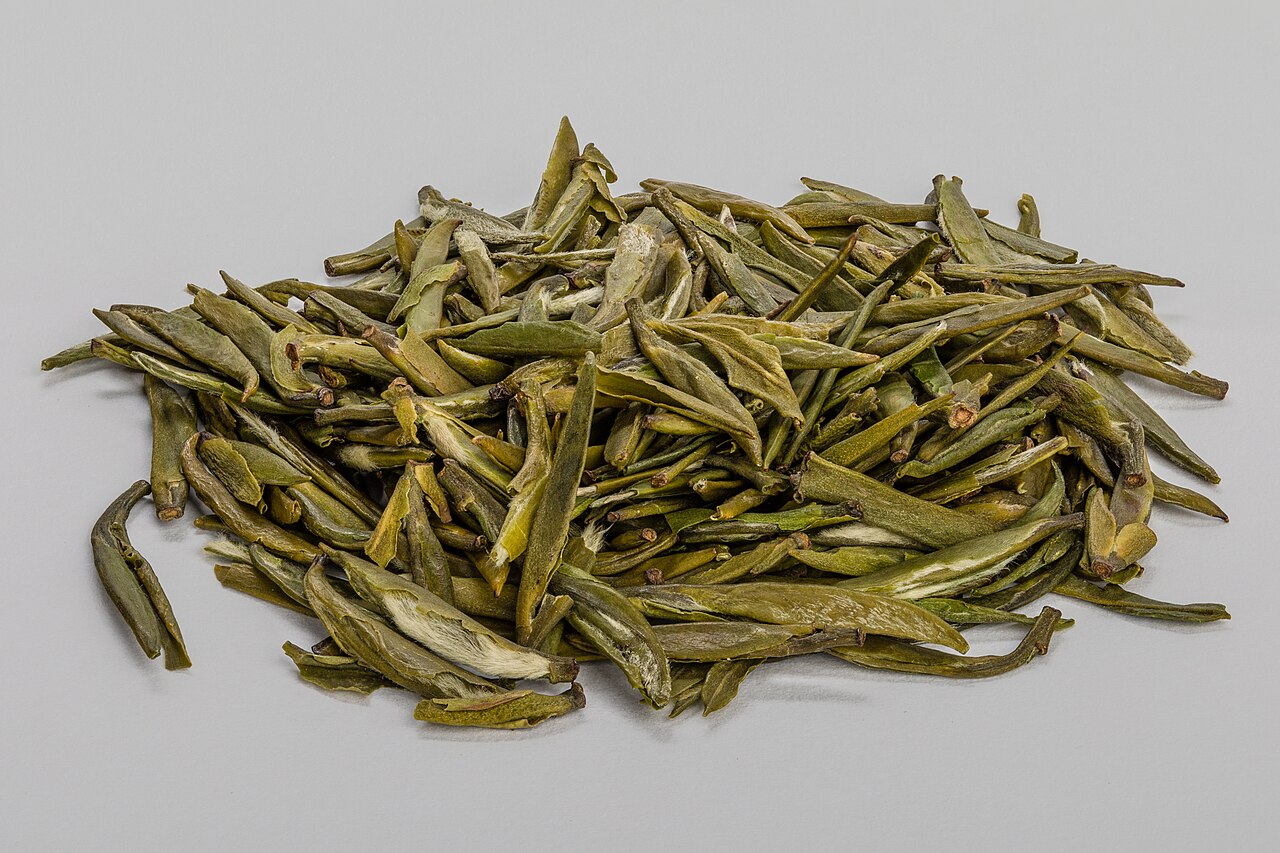
Green tea is the main body, but yellow, black, dark and jasmine teas matter just as much. Mengding Ganlu uses fine buds and leaves, goes through spreading, kill-green, repeated rolling and baking, and ends with a tight, downy, tender-green leaf and a fresh, sweet liquor. Emei Zhuyeqing is flat, straight and bright green. Mengding Huangya develops yellow liquor and leaf through menhuang; it is a yellow tea, not a green tea. Chuanhong Gongfu uses large-leaf material around Yibin and goes through withering, rolling, fermentation and drying, producing tight strips and a high, long aroma. Ya'an Tibetan tea is a dark tea: pile fermentation, screening, blending and pressing produce Kangzhuan, Jinjian and other compressed bricks, the border-sale tea of the tea-horse road. Jasmine tea uses a green-tea base that absorbs fragrance through repeated scenting and a final flower topping. Temperature, timing and pressure differ sharply between these categories; green-tea parameters cannot be applied to yellow or dark tea.
History and market
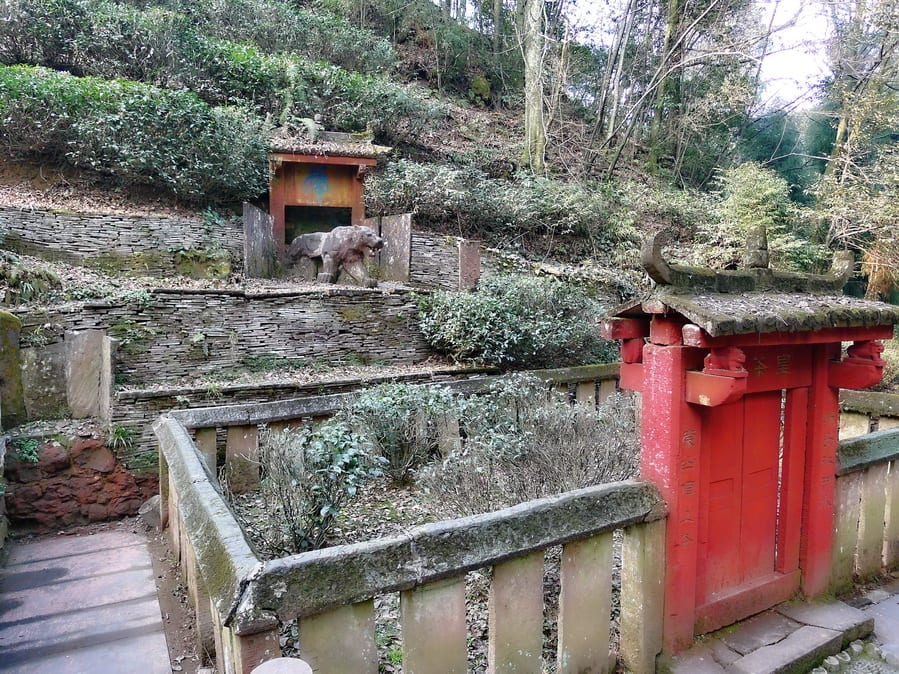
Tradition places Wu Lizhen's tea planting on Mount Mengding in the Western Han. In the Tang, Mengding tea entered the tribute system, and the line "water from the heart of the Yangtze, tea from the top of Mount Mengding" became widely known. In the Song, Sichuan's tea-horse markets expanded, and border tea from Ya'an, Lizhou and Yazhou moved into Tibetan areas. In the Ming and Qing, Sichuan tea travelled northwest, southwest and into the interior along the tea-horse road and the Yangtze. In the modern period, Yibin, Leshan and Ya'an developed parallel green, black and border-tea industries. In 2024 output reached 454,000 tonnes; average value per mu rose from RMB 5,500 in 2020 to RMB 6,800, and improved cultivars covered 83.9% of the area. In 2025 Mengding Mountain tea's brand value reached RMB 5.915 billion and Ya'an Tibetan tea RMB 3.808 billion. New-style tea drinks, export greens, tea tourism and branding are expanding the market, but area, output, comprehensive value and brand value are different measures.
Common misunderstandings
- Sichuan is not only green tea. Yellow, black, dark and jasmine teas are integral to the province.
- Mengding Huangya is a yellow tea, not a green tea. Menhuang is its defining step, and both liquor and leaf tend yellow.
- Zhuyeqing is a product and brand name, not a synonym for every flat green tea. Origin, grade and processing still matter.
- Tibetan tea is a dark tea, not "black tea" in the English sense. It is pile-fermented and compressed as a border-sale dark tea.
- "High mountain and cloud mist" does not guarantee quality. Elevation, aspect, soil, picking and processing must be read together.
Representative teas
The working index contains 17 regional teas. Only the one that has passed the public gate is linked here; the rest remain in editorial review.
Further reading and sources
Provincial statistics, production-area data and geographical-indication information are drawn from the sources below. Definitions, grades and processing for individual teas follow their own entries.
- Sichuan Provincial People's Government: output value passes the trillion-yuan mark as the agricultural economy runs steadily
- People's Daily: Sichuan tea's transformation and lasting fragrance
- National standards public system: GB/T 18665-2008, Geographical indication product Mengshan tea
- Sichuan Provincial Department of Agriculture and Rural Affairs: Ya'an advances tea with the "three teas" approach