Extent
Anhua lies in central Hunan on the middle reaches of the Zi River and is a core Anhua dark-tea area. Tea gardens are spread across mountains and hills, and the Zi and its tributaries carried tea historically. The GI product area is linked to Anhua County, with boundaries and product categories defined by the DB43/T 657 series and GI announcements; not every garden or dark tea in the county automatically qualifies.
Environment
Anhua is mountainous and humid, with red and yellow soils and high forest cover. Mist, slopes and streams affect leaf growth. Dark-tea style comes not only from the site but also from pile fermentation, pressing, fungal growth and drying; “high mountain” or “wild” cannot replace processing and storage.
Product family
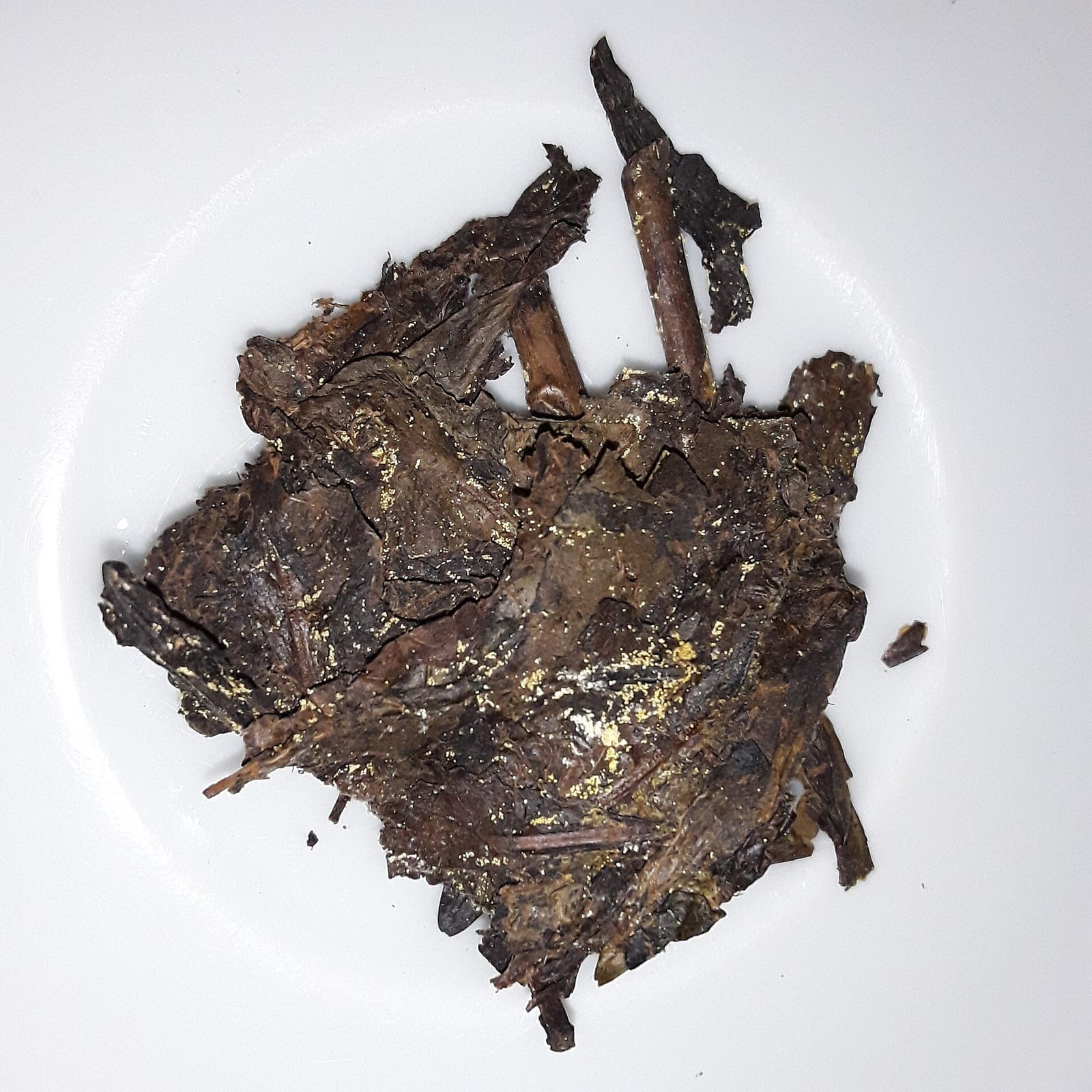
Anhua dark tea includes the “three tips” (Tianjian, Gongjian, Shengjian), the “three bricks” (Fu brick, Hei brick, Hua brick) and Hua Juan (such as Qianliang tea). Tianjian often uses finer material and thinner strips; Fu brick is pressed and may develop Eurotium cristatum (“golden flowers”) under suitable conditions; Hei brick is tightly pressed; Hua Juan has traditional bamboo-basket and cylinder forms. Raw material, processing and standards differ by product.
Processing
Anhua dark tea goes through fixation, rolling, pile fermentation and drying, followed by sieving, blending, steaming/pressing or basket filling. Pile fermentation is a microbial and hydrothermal post-fermentation. Fu-brick “flowering” requires controlled temperature, humidity and ventilation. Golden flowers do not appear in every dark tea and are not automatically better; failed flowering, contamination or poor storage can damage quality.
Quality and flavour
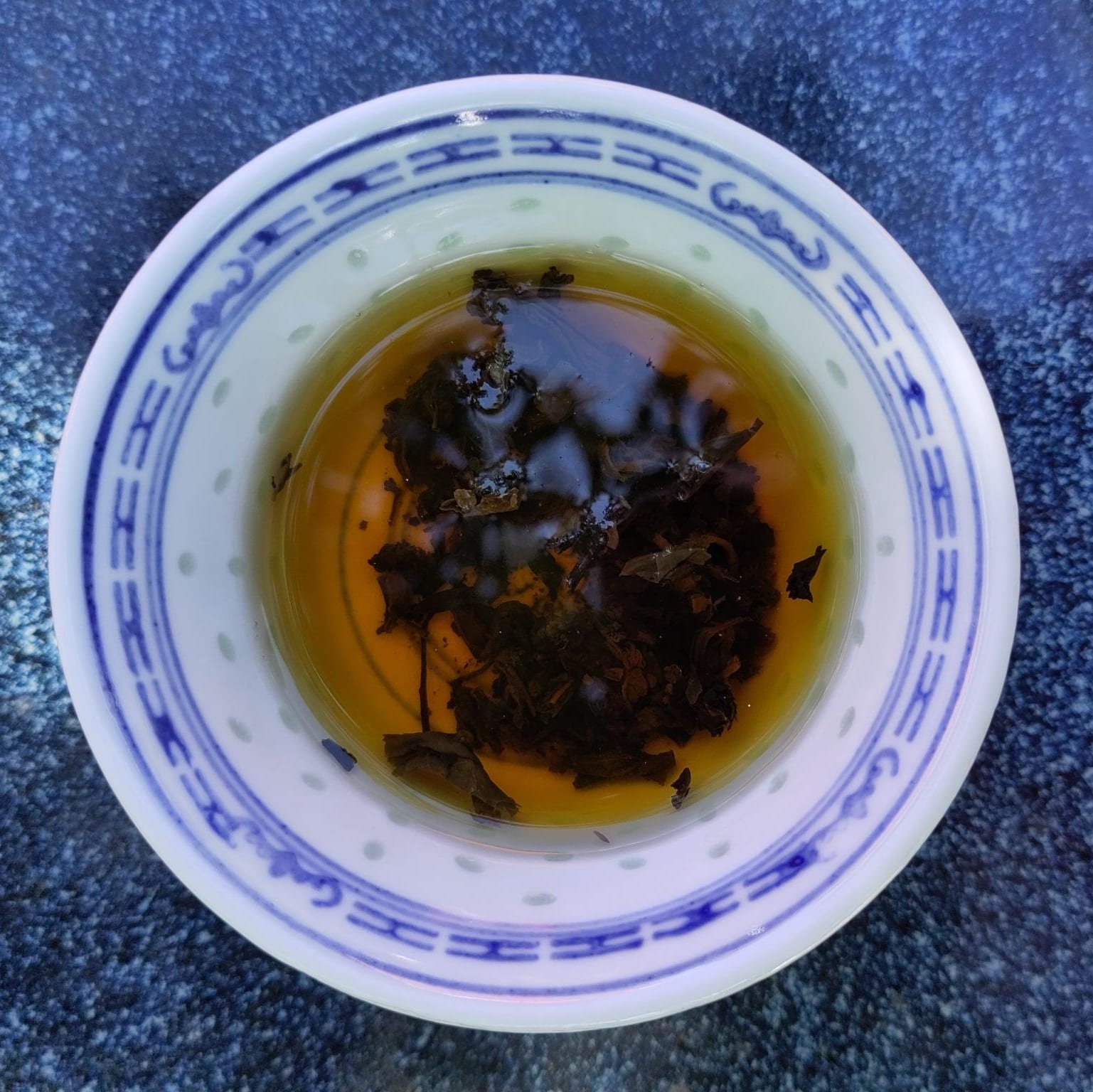
Liquor ranges from orange-red to deep red; taste is mellow, with possible pine smoke, fungal, woody, aged or lightly medicinal notes. Tianjian is usually finer; Fu brick may show floral-fungal notes; Hei brick and Hua Juan are more tightly pressed and suit boiling. Material, fermentation, flowering and storage determine style; “golden flowers”, “aged aroma” and “pine smoke” are descriptions, not uniform grades.
History and boundaries
Anhua dark tea moved through the Zi River, Dongting water system and north-west trade routes in the Ming and Qing, as part of the border-tea and brick-tea system. Specific routes, dates and volumes still need local gazetteers, customs archives and tea-industry records. Anhua dark tea was long oriented to border markets and only re-entered broader consumer markets in recent decades.
Common misconceptions
- Anhua dark tea is not Pu-erh. Both are dark tea, but origin, processing and standards differ.
- Do all Fu bricks have golden flowers? No. Flowering depends on processing and storage.
- Is Tianjian the highest grade? It is one product type within the Xiangjian family; grade depends on the standard.
- Does ageing always improve dark tea? No. Material, moisture, storage and hygiene determine the direction.
Representative teas
- Anhua dark tea: the general name and product family.
- Anhua Tianjian: finer material and thinner strips.
- Yiyang Fu brick tea: a representative Fu brick, sometimes with “golden flowers”.
- Anhua Songzhen: a green tea, not to be confused with Anhua dark tea.
Sources
- GB/T 32719.1-2016, Dark tea — Part 1: Basic requirements.
- GB/T 32719.5-2018, Dark tea — Part 5: Fu tea.
- DB43/T 657.4-2021, Geographical indication product — Anhua dark tea, Part 4: Fu tea.
- Legacy Anhua tea record, retained for provenance.
This page is an AI-edited translation based on the reviewed Chinese source. It is not a human-expert endorsement.