Many drinkers treat “astringent” as a kind of bitterness, or as shorthand for “high polyphenols”. Neither is accurate enough. Bitterness comes from specific receptors. Astringency is closer to a tactile sensation: the mouth dries, the tongue and palate feel rough or tightened, as if a layer has been drawn across them. It is not a simple taste but the result of polyphenols interacting with saliva and the oral surface, reducing lubrication.
That also explains a common experience: the same tea can feel “unbearably drying” to one person and merely “a bit firm” to another. No one is exaggerating. Saliva composition, drinking order and sensitivity differ. Understanding the mechanism is more useful than chasing a “zero-astringency” tea.
Astringency is not bitterness
Bitterness and astringency often arrive together, but they run on different perceptual lines:
- Bitterness is detected by bitter receptors, commonly from caffeine, some alkaloids and some polyphenols; it is concentrated toward the back of the tongue and mouth.
- Astringency is mainly drying, roughness, tightening and friction — a tactile or bodily sensation. It can exist without obvious bitterness.
- Returning sweetness is the saliva and sense of moisture coming back after astringency. It is easily read as “bitterness turning to sweetness”, but it is not a measure of sugar in the tea.
A tea that is not bitter is not automatically non-astringent. Record separately: bitterness on entry, dryness on the cheeks and tongue, dryness after swallowing, and how long it takes to soften.
What happens in the mouth
The most widely accepted mechanism is that polyphenols bind salivary proteins, forming soluble or insoluble complexes, reducing lubrication and increasing friction. More than one protein is involved:
- Proline-rich proteins (PRPs). A major salivary protein family that binds tannins and catechins; the complexes can aggregate and precipitate.
- Mucins. Large glycoproteins responsible for lubrication and water retention; polyphenol binding can weaken the protective film.
- Oral epithelial proteins. Complexes may also attach to the mucosa, producing a lasting roughness.
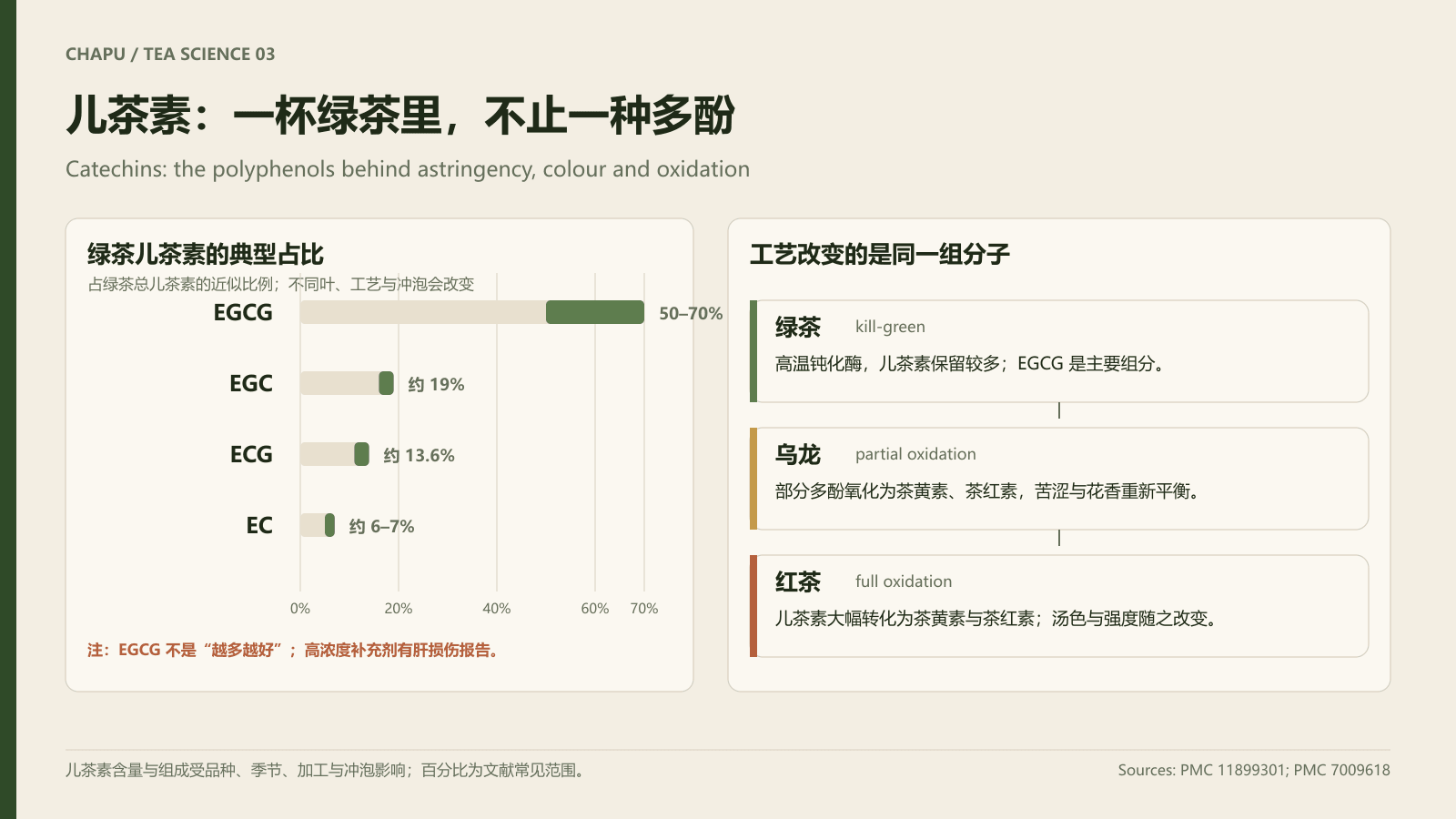
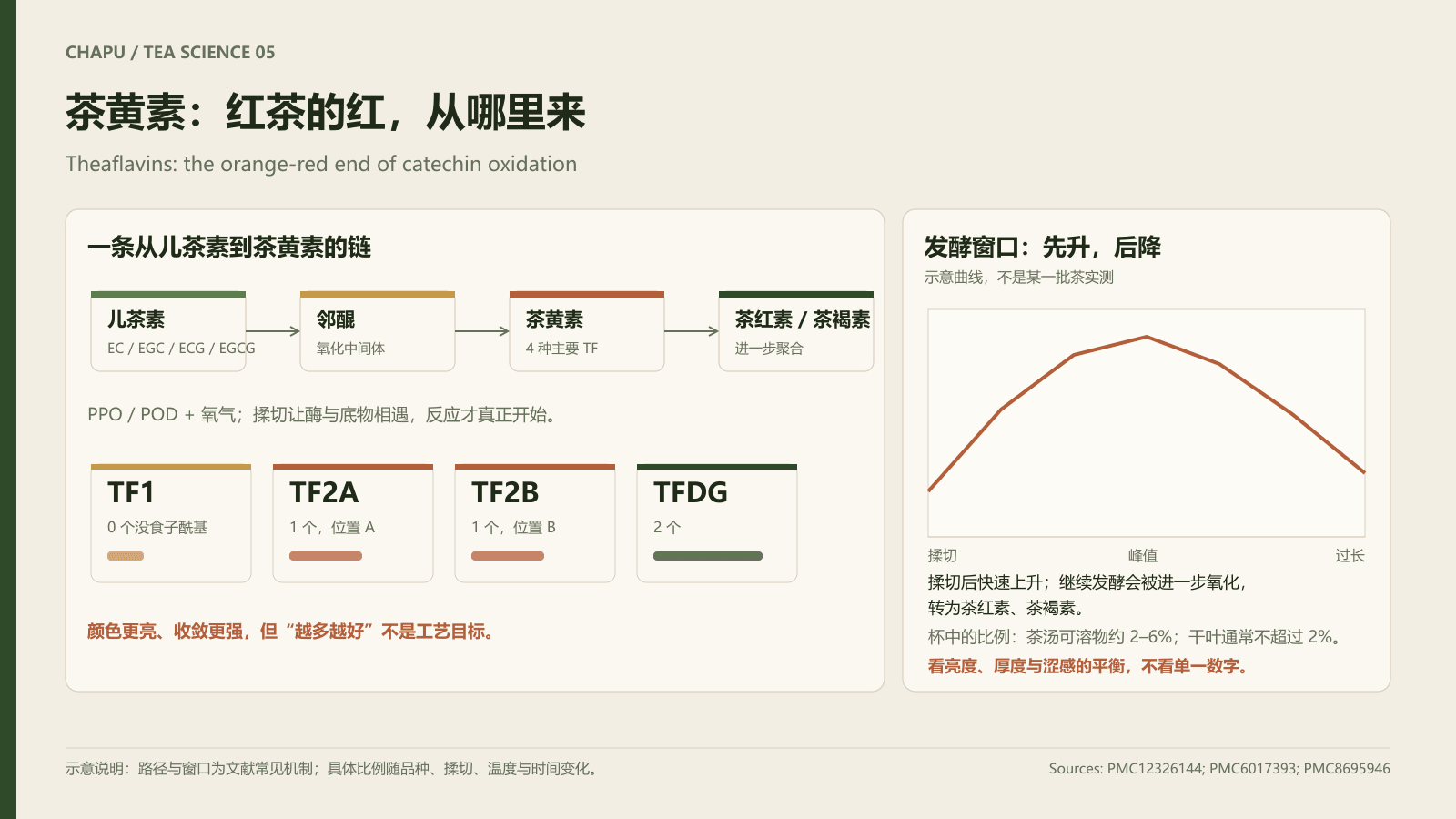
The interactions are mainly non-covalent: the polyphenol galloyl ring stacks against the proline ring, and hydrogen bonds stabilise the complex. More galloyl groups and greater molecular flexibility often allow more binding sites. EGCG and ECG, which carry galloyl groups, tend to feel more astringent than catechins without them. Theaflavins in black tea can act similarly, though strength depends on structure.
This is the dominant model, not the only explanation. Recent work also examines oral tactile receptors, epithelial cells and the salivary film. Astringency is not a single receptor switch.
Which tea polyphenols feel more astringent
Tea astringency is not set by one “total polyphenol” number. Composition and state matter:
- Catechins. EGCG and ECG are major contributors in green tea; EGC is comparatively softer. Gallated catechins bind proteins more readily than free ones.
- Theaflavins. Black-tea oxidation products; TF2A, TF2B and TFDG, with galloyl groups, feel more astringent while also contributing brightness.
- Thearubigins and theabrownins. Larger polymers may feel thick, smooth or dull rather than simply astringent. Polymer size alone does not predict mouthfeel.
- Other polyphenols. Flavone glycosides and phenolic acids also participate, with different thresholds and contributions.
A high total polyphenol number therefore only indicates more potential substrate. It cannot predict how astringent the cup will feel. The same total could contain less EGCG, more glycosides and a different pH, and land completely differently.
Brewing amplifies or softens astringency
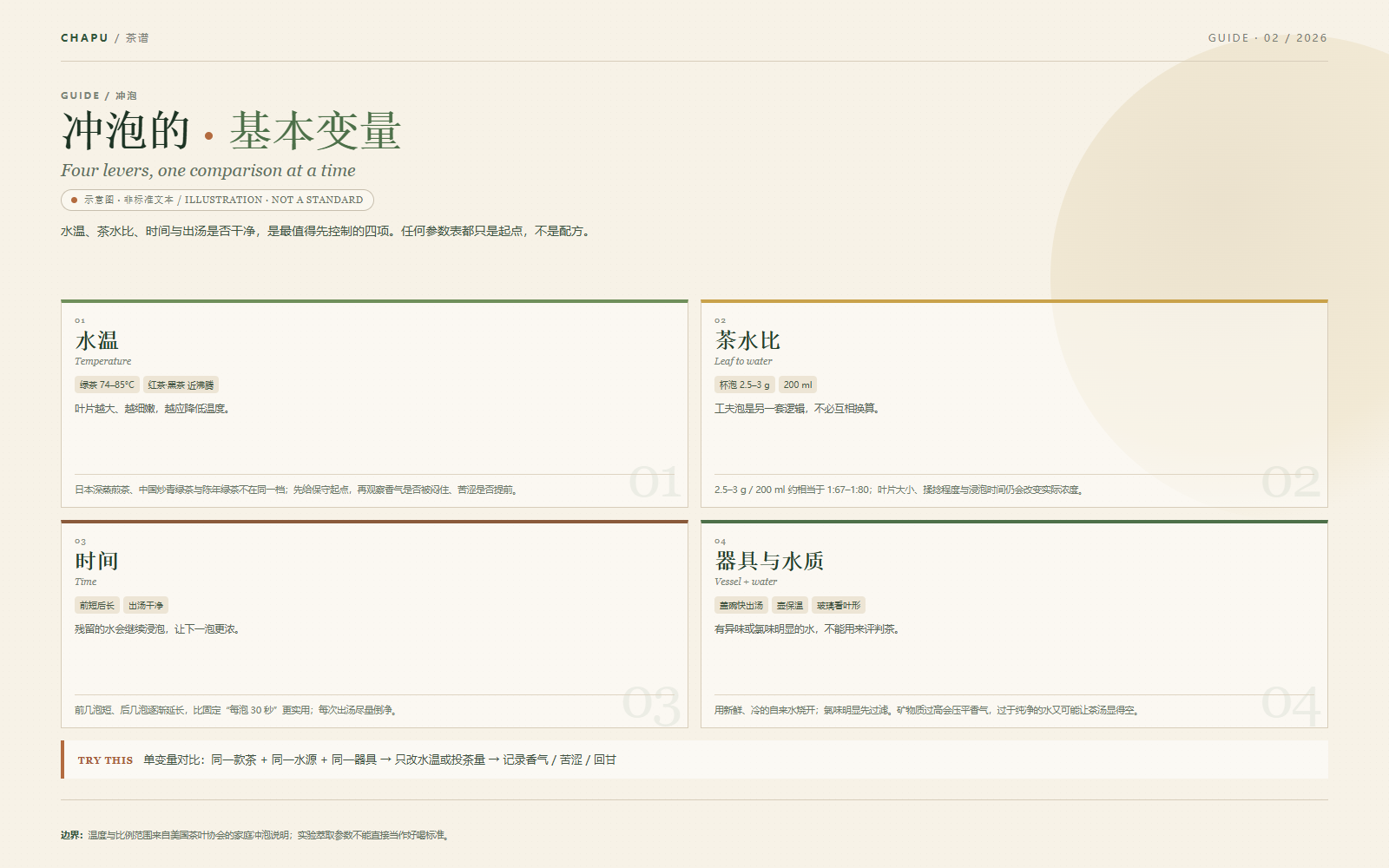
Astringency is a product of concentration and oral state. These variables are worth fixing first:
- Leaf amount. More polyphenols per volume usually means more astringency, though too much leaf also buries aroma.
- Water temperature. Hotter water raises extraction rate and total load, especially in the first steeps where gallated catechins come out quickly.
- Time. Longer steeping increases both polyphenols and caffeine; astringency often peaks later than bitterness.
- Water. Hard water can make the liquor feel rougher and darker; very low-mineral water can make astringency feel sharper.
- Decanting. Short early steeps reduce accumulation; leaving the leaf sitting in water amplifies it.
- Leaf form. Broken tea and bags extract quickly and bring astringency earlier; whole leaf is usually slower.
These variables interact. Lower temperature with a longer steep can reach a similar total extraction but a different bitter/astringent balance. When comparing a tea, change one variable and record the timeline: entry, cheeks, after swallowing, returning sweetness.
Why the same cup feels different to someone else
Individual variation is not mysterious. At least three sources matter:
- Saliva flow and protein composition. People with more saliva and faster protein replenishment may dilute or recover from astringency more quickly; others feel the same concentration more strongly.
- Oral state. Dehydration, an empty stomach, recent brushing or acidic food all change the oral surface and saliva.
- Attention and experience. One drinker focuses on aroma, another on friction; training refines description and can shift thresholds.
“I don’t find it astringent” is therefore not proof that the tea is not astringent, and “I find it astringent” is not proof of excess polyphenols. Treat personal perception as one data point, not a verdict.
Astringency and returning sweetness
After astringency, saliva returns, the mouth feels moist again, and a sweetness-like sensation can follow. It may come from saliva itself, sugars and amino acids in the liquor, or contrast: the previous tightening makes the return feel sweeter.
But returning sweetness is not an automatic consequence of astringency. A dryness that never clears, or gets worse with each cup, usually points to excessive concentration, broken leaf or over-steeping. A clean firmness should begin to soften within seconds to tens of seconds, not scrape the mouth for minutes.
Four common misunderstandings
| Claim | What is wrong | A more careful reading |
|---|---|---|
| “Astringent means bitter” | The mechanisms and locations differ | Record bitterness, astringency, dryness and returning sweetness separately |
| “More astringent means more polyphenols” | Composition, saliva and brewing all affect perception | Total polyphenols cannot replace sensory evaluation; EGCG/ECG ratio matters more |
| “Old tea is never astringent” | Ageing changes polyphenols but does not erase them | Storage, leaf quality and brewing can still produce dryness |
| “Rinsing the leaf removes all astringency” | Rinsing improves aroma and moisture, with limited effect | Reducing leaf, temperature or time is more direct |
Source boundary
This page can confirm: astringency is mainly a tactile sense of drying, roughness and tightening, not the same as bitterness; polyphenols can interact with salivary PRPs, mucins and the oral surface, forming complexes and reducing lubrication; galloyl groups and molecular structure affect binding strength; and individual saliva differences change the intensity of the same tea.
This page does not confirm: the exact polyphenol composition of a particular tea; that astringency alone can judge polyphenol content or quality; or that stronger astringency means greater health benefit. Anyone taking medication or managing an oral or gastrointestinal condition should put their clinician’s advice above this page.