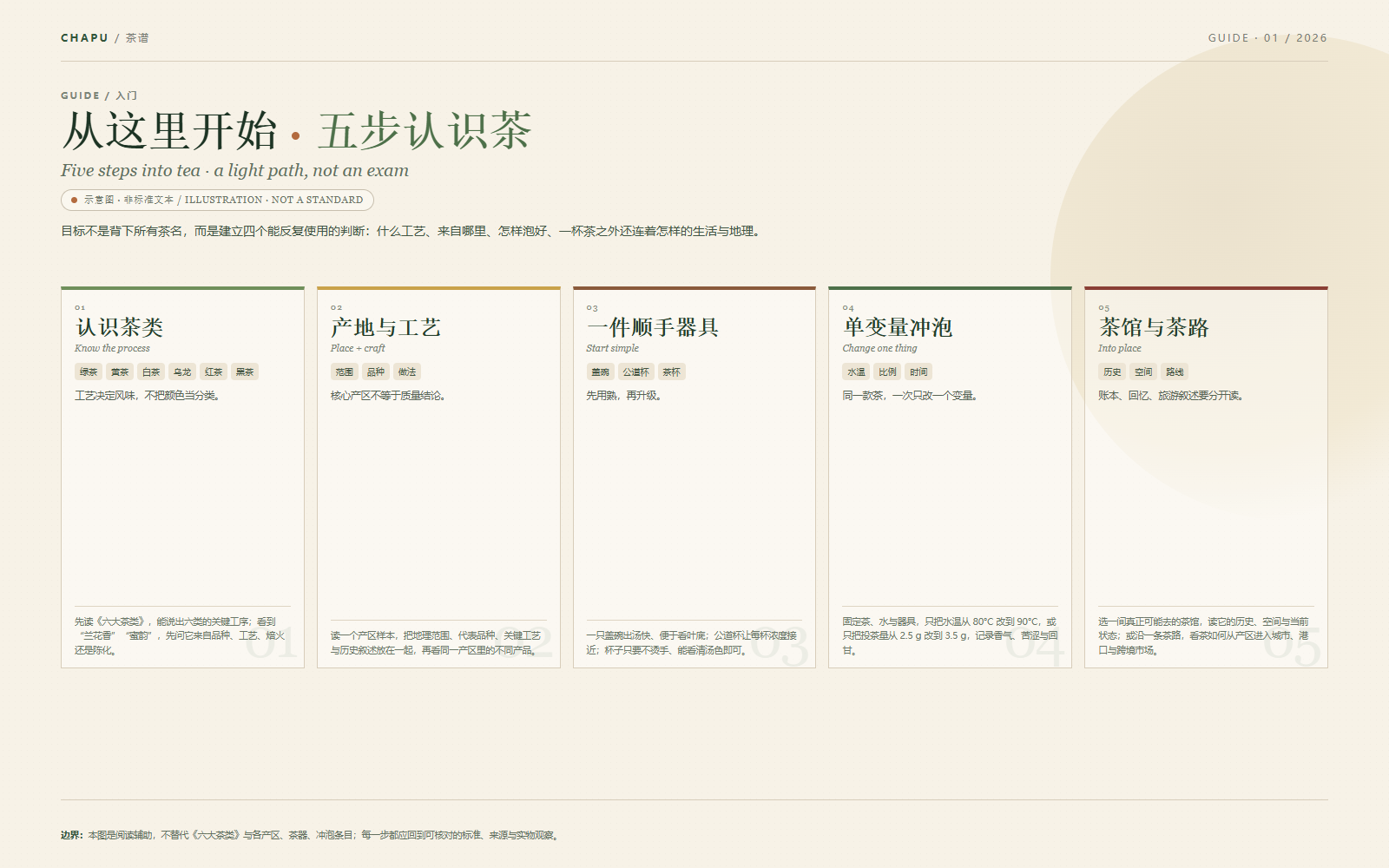
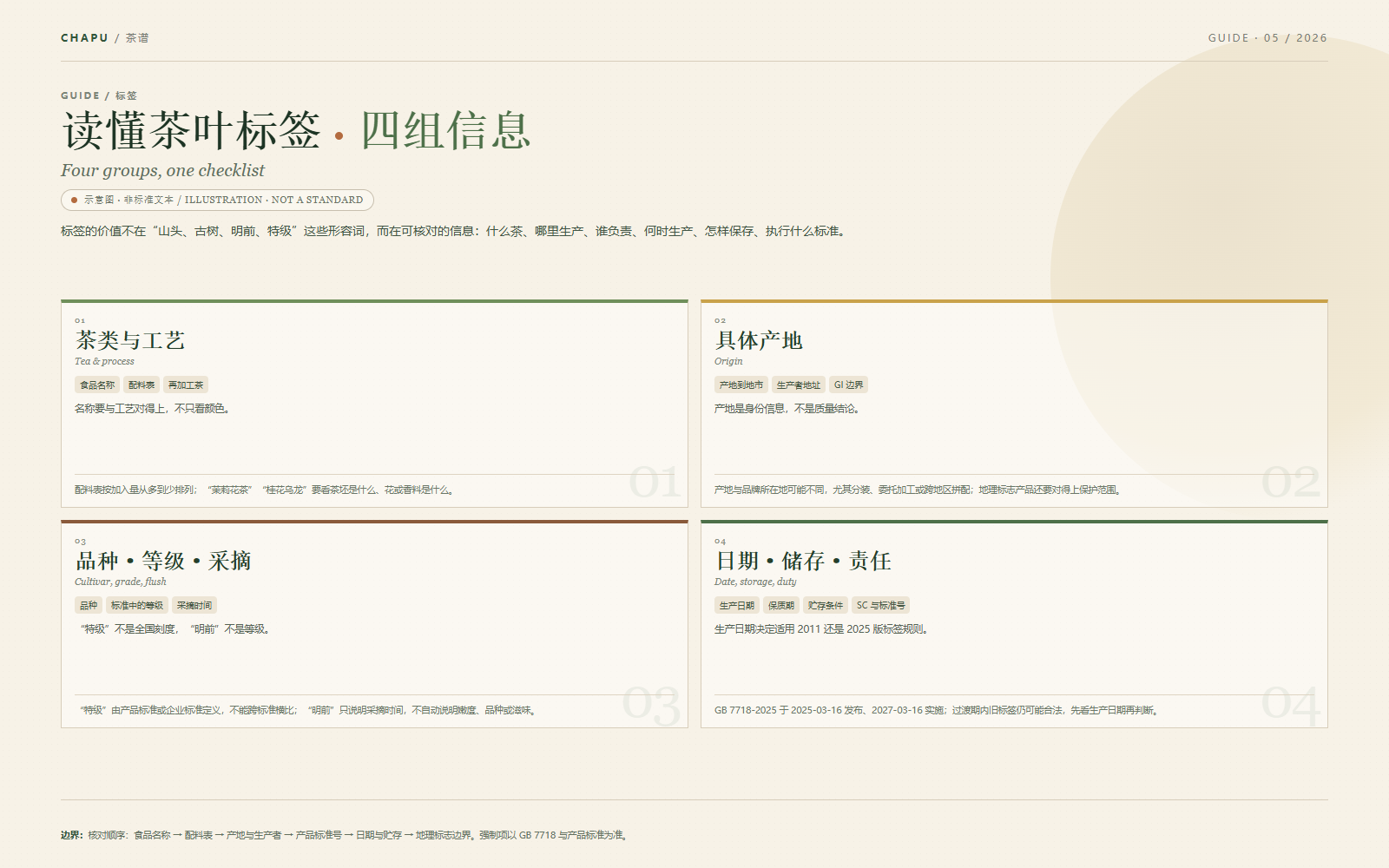
Ethical Tea Partnership is a practical guide. Its job is to turn a choice into steps: setting first, ranges second, troubleshooting last.
Key points
- Ethical Tea Partnership is a practical guide. Its job is to turn a choice into steps: setting first, ranges second, troubleshooting last.
- Separate concept, variables and setting before copying a parameter.
- With mould, sourness, clumping or unknown source, prioritise food safety.
Context
This page places Ethical Tea Partnership inside the framework of 指南: what problem it solves, which variables matter, and how to judge the result.
Set the setting
Daily mug, gongfu, cold brew, milk tea and sensory review have different goals. Fix people, vessel, time and taste before discussing ratios.
Decision table
For bitterness, check temperature, time and leaf amount; for thinness, check leaf, temperature and water; for off-flavour, stop and check storage. Change one variable at a time.
Order of work
Fix water, vessel and leaf; change one variable; record the result; repeat three times before adopting a personal parameter.
Common misreadings
- “Copy one temperature table”: Tea type, leaf grade, shape and dose all change the result.
- “Stronger is better”: Strength, body, complexity and balance are different dimensions.
Practical advice
Write the setting first; change one variable; record grams, millilitres, temperature and time; use identical cups for A/B; discard mouldy or sour tea.
Source boundary
This page can establish a decision order and ranges. It cannot prescribe one set of parameters for everyone or rescue spoiled tea by brewing.