Why it matters
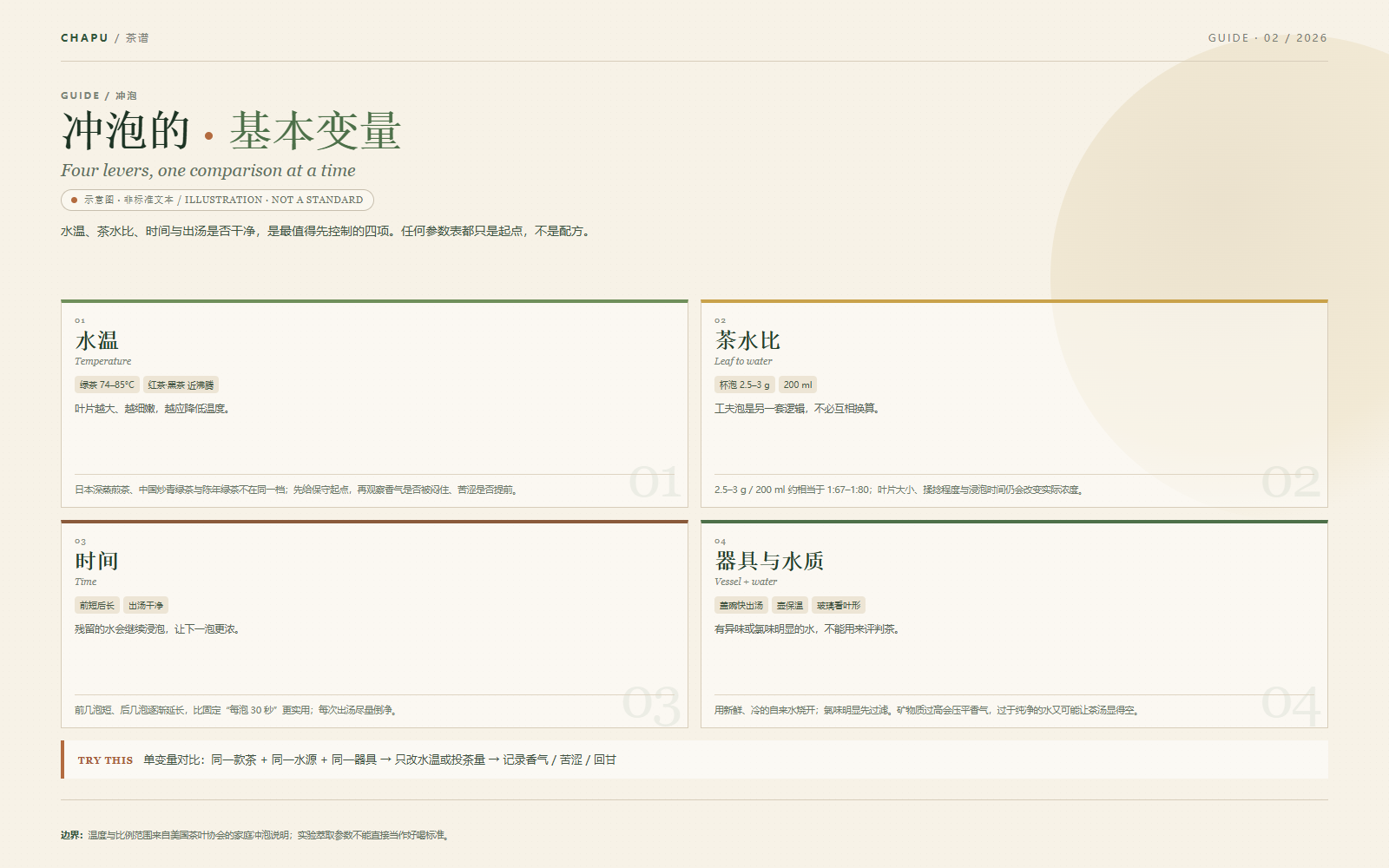
Temperature affects how fast aroma compounds, sweetness and bitter substances enter the cup. Hot water extracts faster and can make aroma more obvious, but it also brings out bitterness and astringency. Cooler water protects delicate aromas, yet may leave the tea thin. Temperature is not a standalone rule: leaf-to-water ratio, infusion time, vessel and leaf grade all matter.
Starting points
- Green tea: about 75–85°C; finer spring buds can take even cooler water.
- White tea: about 85–90°C for young tea; aged or mature-leaf white tea can take hotter water.
- Lightly oxidised oolong: about 90–95°C; roasted oolong can take water near boiling.
- Black tea: about 90–100°C, depending on cultivar and leaf size.
- Dark tea and Pu-erh: usually near boiling; compressed tea needs more heat and time.
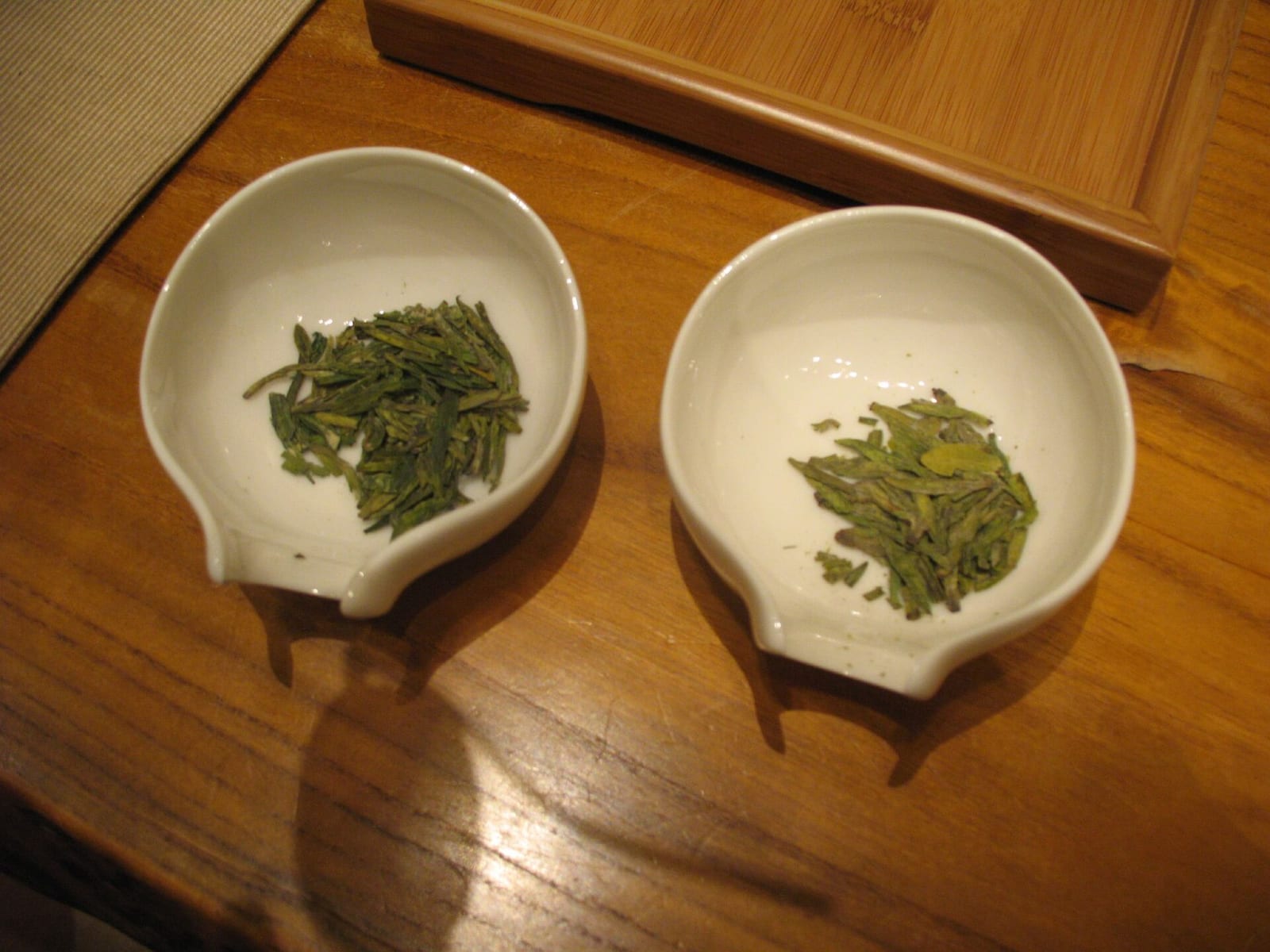
These are starting points, not a standard answer. Within one tea family, fine or broken leaf usually needs cooler water or a shorter infusion; coarse, compressed or aged leaf usually needs hotter water.
How to adjust
Keep the leaf ratio and infusion time fixed, then change only the temperature. If the tea turns bitter, cool the water or shorten the infusion. If aroma is weak and the body is thin, try hotter water. Change one variable at a time so you can tell what caused the difference. Recording temperature, leaf weight, water volume and infusion time is more reliable than relying on memory.
Common misconceptions
- Does boiling water ruin every tea? No. It depends on the tea, leaf grade, brokenness and personal taste.
- Is cooler water always sweeter? No. It can leave both aroma and body under-extracted.
- Do you need a thermometer? It is useful for learning and comparison; experienced brewers may also use the sound of the kettle, steam and feel.
- Can every tea use the same temperature? No. Even products in the same category may need different treatment.
Sources
- GB/T 23776-2018 Tea sensory evaluation method — Chinese national standard for tea sensory evaluation; used here as a reference for tasting and brewing records.
This page is an AI-edited translation based on the reviewed Chinese source. It is not a human-expert endorsement; specific claims are bounded by the listed sources.