In one sentence
Vietnamese jasmine tea is green tea that has absorbed the scent of fresh jasmine. It is not a jasmine-flower infusion. The base is Vietnamese green tea, the perfume comes from white jasmine blossoms, and the result is the country’s most everyday scented tea: cheap enough for a street stall, good enough for a guest.
Flower and tea
Jasmine (Jasminum sambac) opens in the late afternoon and evening, when its perfume is strongest. VOV reports that growers pick at that point, then layer the fresh blossoms with dried green tea. Picking time can shift with cultivar, weather and method; the principle is the same: use fresh flowers when their scent is at its peak.
The traditional ratio is about 1 kg of jasmine to 1 kg of green tea. Flower and leaf are layered so the tea absorbs the perfume. When the blossoms fade, they are sieved out and a fresh layer is added. Premium tea may go through three or four scenting rounds; ordinary tea may get one or two. More rounds mean deeper, longer perfume and a higher cost.
The base
Vietnamese jasmine tea can be built on:
- green tea — the default: light liquor, mild astringency, good scent absorption;
- fish-hook green tea — buds rolled into a hook shape, common in mid- and high-end packs;
- ancient-tree jasmine — older tea material with more body, limited production;
- oolong jasmine — an oolong base, rounder and sweeter, a different style.
VietnamPlus groups the market into ancient-tree jasmine, fish-hook green tea with jasmine and oolong jasmine. In ordinary shops, the plain green-tea base is still the most common.
Flavour
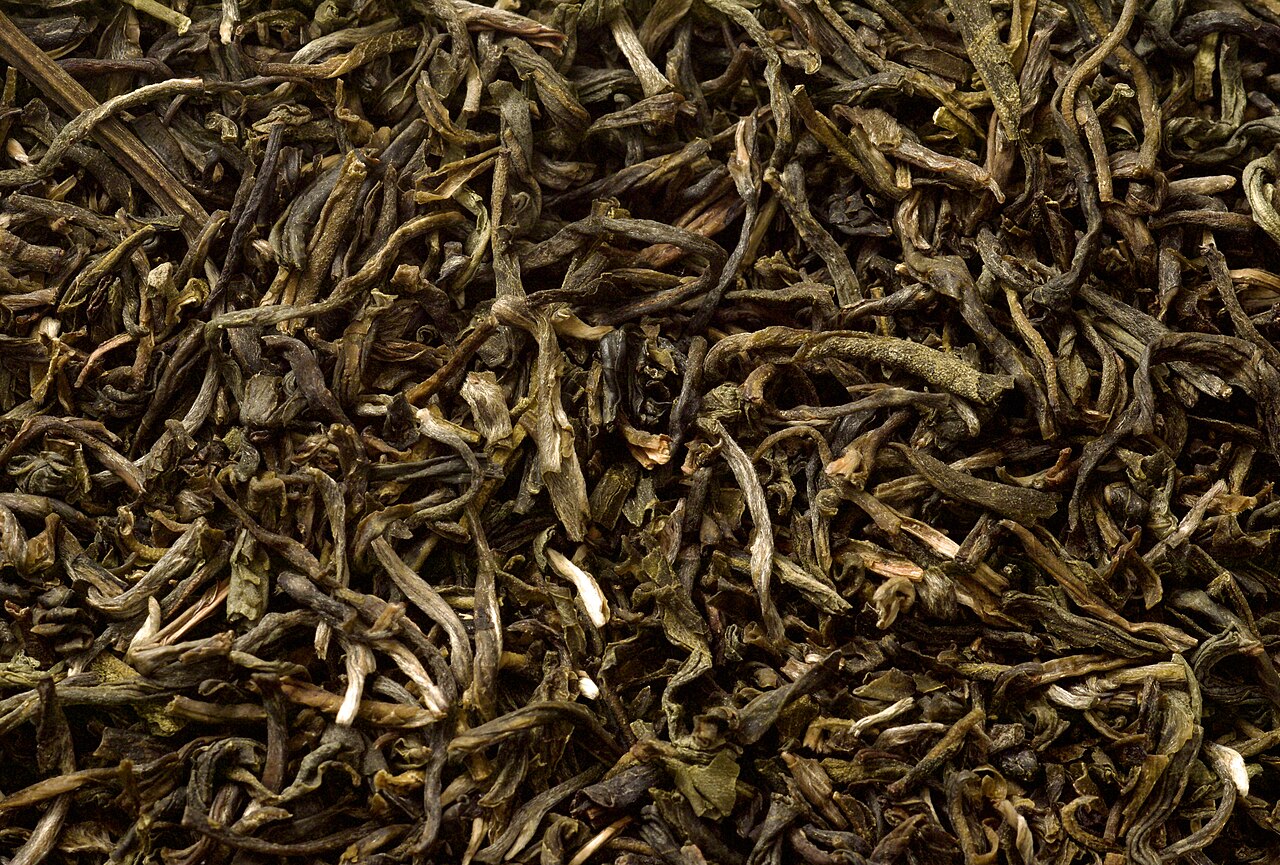
- Dry leaf: dark green tea with a few white petal fragments; sweet jasmine over a light green note.
- Liquor: pale yellow-green to gold, clear.
- Aroma: fresh jasmine, white flowers and a soft green edge; good tea is clean, not perfumed or sugary.
- Taste: soft and sweet at the front, light astringency at the back, medium finish.
- Body: clean and relatively light; easy to drink in quantity.
Brewing
- Hot: 4–6 g per 150–200 ml, 80–85°C, 1–2 minutes; lengthen for later infusions.
- Pot: 5–8 g per 500 ml, 85°C, 2–3 minutes; good for a family table.
- Iced: brew stronger (about 1:50), cool, then pour over ice with lemon or a little sugar.
- Do not over-steep: the green base turns astringent and the jasmine goes dull.
Buying
- Aroma: fresh jasmine, not perfume, candy or soap.
- Flower content: traditional scenting usually leaves very few petals after sieving. A jar full of petals with a sharp, loud aroma may be flavoured, not scented.
- Base leaf: intact buds and leaves, dark green and glossy; dusty, yellow or grey leaf is a bad sign.
- Origin: Vietnamese green tea comes from Thái Nguyên, Hà Giang and Lâm Đồng, among other regions; jasmine may be grown around Hanoi, Tuyên Quang or Bảo Lộc.
- Storage: sealed, dark and dry; the perfume fades after opening.
How it is drunk
- Plain: no sugar, with Vietnamese snacks or seeds.
- Iced: ice and lemon, the summer street-stall version.
- Milk tea base: jasmine tea makes a lighter, more floral base than black tea.
- Guests: a small pot and several tiny cups, refilled again and again; no elaborate gear needed.
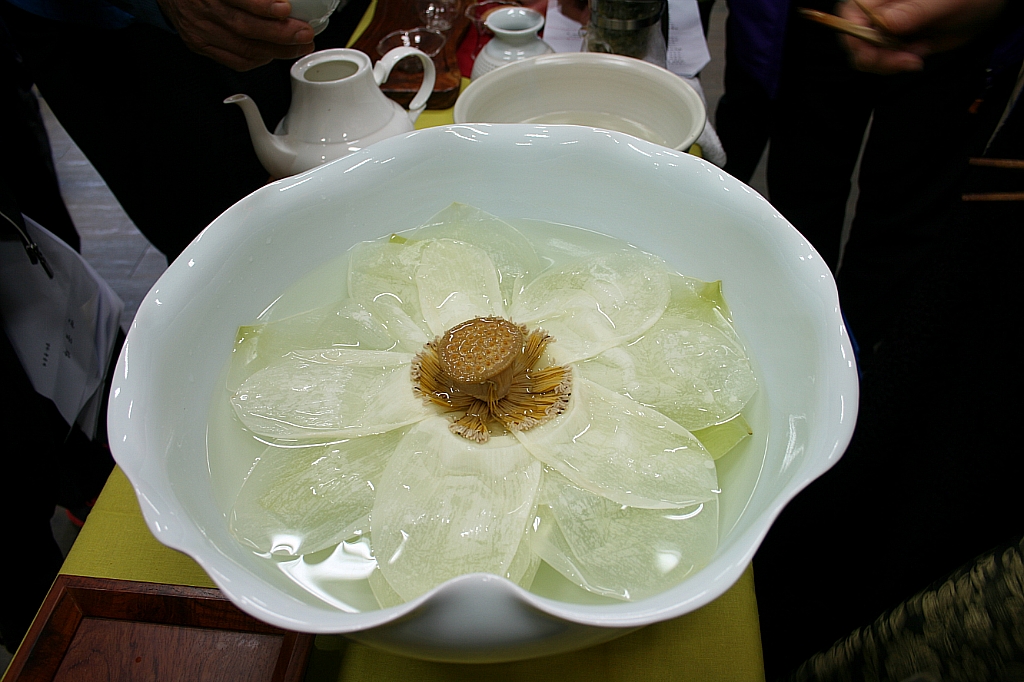
Jasmine vs lotus
| Dimension | Jasmine tea | Lotus tea |
|---|---|---|
| Flower | Jasmine, opens in the evening | Lotus, picked at dawn |
| Aroma | Sweet, white-floral | Cool, water-lily |
| Method | Layered flower and tea, roughly 1:1 | Anther scenting, 15–21 days |
| Price | Everyday, affordable | Craft, expensive |
| Occasion | Daily, summer, restaurants | Tet, guests, gifts |
Sources and status
The entry draws on VOV World for the picking time, the 1:1 flower-to-tea ratio and the everyday role, and on VietnamPlus for the scented-tea classification and product forms. Old claims of a global superlative, that “nine scenting rounds are required”, or that jasmine tea originated in Vietnam have been removed. The page is reviewed for structure and sourcing, not as a final cultural history.