In one sentence
Vietnamese lotus tea is not a lotus infusion. It is green tea that has absorbed the scent of lotus flowers. The base is usually Thái Nguyên green tea; the perfume comes from the hundred-petal lotus of Hanoi’s West Lake. The cup still tastes like tea — lightly astringent, sweet at the end, with a clean floral top note.
Where it comes from
The traditional centre is Quảng An village, on the edge of West Lake in Hanoi. VNA reported in 2025 that more than 30 households there still make lotus tea. The local Bach Diep lotus — “hundred petals” — is prized for a fine, fresh perfume that survives the scenting process.
Lotus tea is not an everyday drink. It belongs to Tet, to guests, to gifts and to formal occasions. Jasmine tea is the daily alternative; lotus is the one you bring out when the moment matters.
Two methods, not one
Vietnamese lotus tea is made in two distinct ways. It is wrong to present either one as “the” tradition.
1. Anther scenting — the high-aroma craft
- Pick the Bach Diep flowers at dawn, while the petals and anthers are intact.
- Gather the anthers, called gạo sen — the part with the strongest perfume.
- Layer the anthers with Thái Nguyên green tea so the leaf absorbs the scent.
- Dry, sieve out the spent anthers, then repeat with fresh anthers.
- Repeat the scenting and drying cycle for about 15–21 days.
The flower count is high: about 100–120 lotus flowers yield 100 g of anthers, and 1 kg of finished tea can take thousands of flowers. That is the main reason true lotus tea is expensive.
2. Overnight in the flower — the simpler craft
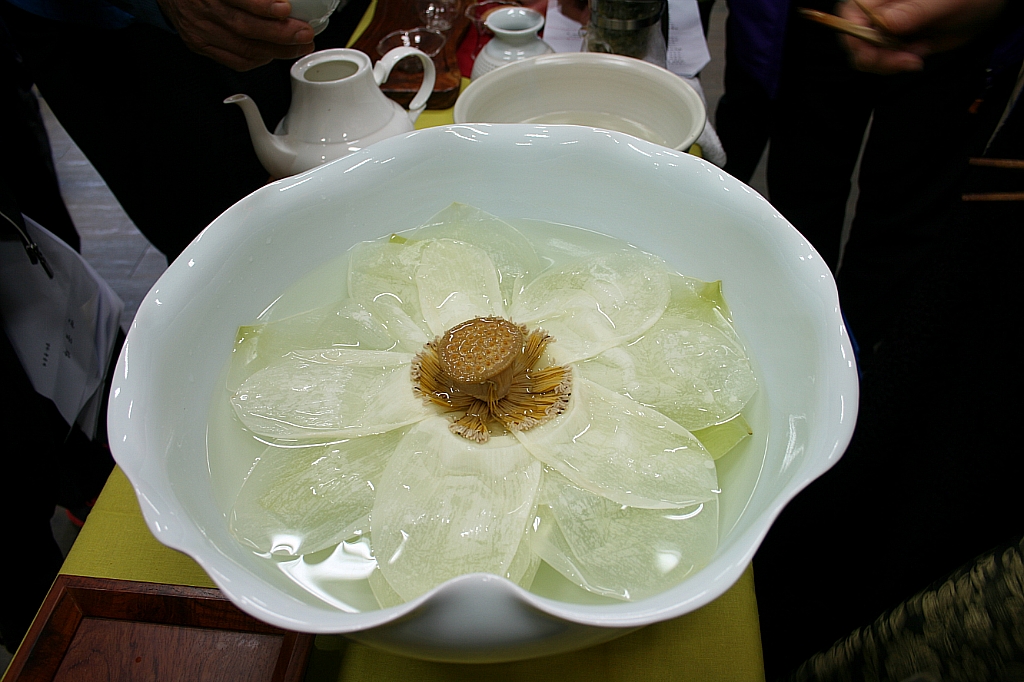
A second, common method stuffs dried green tea into a freshly opened lotus flower and leaves it overnight, so the leaf picks up the scent from the whole bloom. It uses fewer flowers and is easier to do at home, but the perfume is usually less fine and less persistent than the repeated anther method. It is a real technique, not a fake — just not the whole tradition.
Flavour
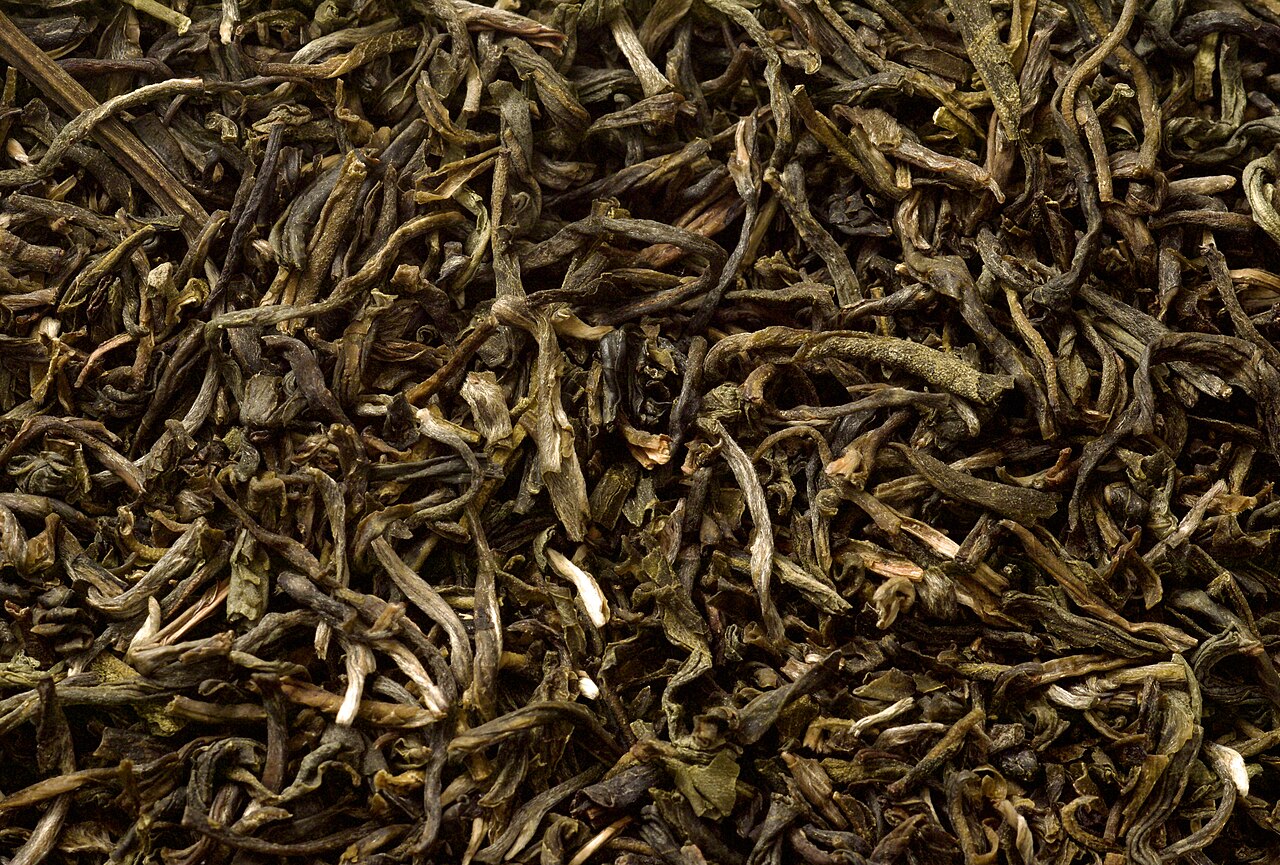
- Dry leaf: dark green, tight green-tea strips with a few petal or anther fragments; sweet lotus over a green, slightly grassy base.
- Liquor: pale yellow-green to gold, clear.
- Aroma: fresh lotus, water lily and a light green note; good tea smells clean, not perfumed or powdery.
- Taste: soft entry, light astringency, a sweet finish; the lotus returns in the back of the mouth.
- Body: clean and comparatively light, with a medium finish.
Brewing
- Ratio: 4–6 g per 150–200 ml.
- Water: 80–85°C. Boiling water brings out both green-tea astringency and a raw “green” note in the flower.
- Time: 1–2 minutes for the first infusion, then lengthen.
- Vessel: a gaiwan or a glass pot; glass shows the leaf and the liquor.
- No sugar: the tea already has a sweet finish; sugar flattens the perfume.
Buying
- Aroma: clean, fresh lotus; avoid perfume, soap or a closed, musty smell.
- Base leaf: intact buds and leaves, dark green and glossy; dusty, yellow or grey leaf is a bad sign.
- Origin: Quảng An is the traditional centre; other regions make lotus tea too, with different lotus varieties and methods.
- Price: flower count drives cost. Very cheap “lotus tea” is likely flavoured or made with very little flower.
- Storage: sealed, dark and dry; the perfume fades after opening.
Cultural place
VNA and VietnamPlus both treat West Lake lotus tea as a Hanoi cultural symbol, tied to the lake, the Bach Diep lotus, Tet and hospitality. VNA’s 2025 report says the craft is still passed down within families but few young people are learning it; VietnamPlus says the tea is on the national intangible cultural heritage list. Those are cultural claims, not a guarantee of quality.
Sources and status
The entry relies on VNA’s 2025 long-form report for Quảng An, the Bach Diep lotus, the anther method, the 15–21 day cycle, the flower yield and the flavour description, and on VietnamPlus for the heritage listing and the scented-tea classification. The old draft’s claim that “tea stuffed into the flower overnight” was the only traditional method has been corrected to two methods. Old figures such as “a thousand years”, “royal-only” and “ten thousand flowers per kilo” have been removed or replaced with the sourced range. The page is reviewed for structure and sourcing, not as a final ethnography.