“Does tea affect my medicine?” is not a yes-or-no question. Tea contains caffeine, catechins, tannins and vitamin K. These can change drug absorption, metabolism or clotting, but most evidence comes from cells, animals or small human pharmacokinetic studies. Clinically meaningful interactions are concentrated in a limited set of drugs and specific patterns of use.
Separate the component from the interaction
| Component | Possible target | Evidence profile |
|---|---|---|
| Caffeine | Stimulants, heart rate, sleep, selected drug metabolism | More human data; dose and individual clearance vary widely |
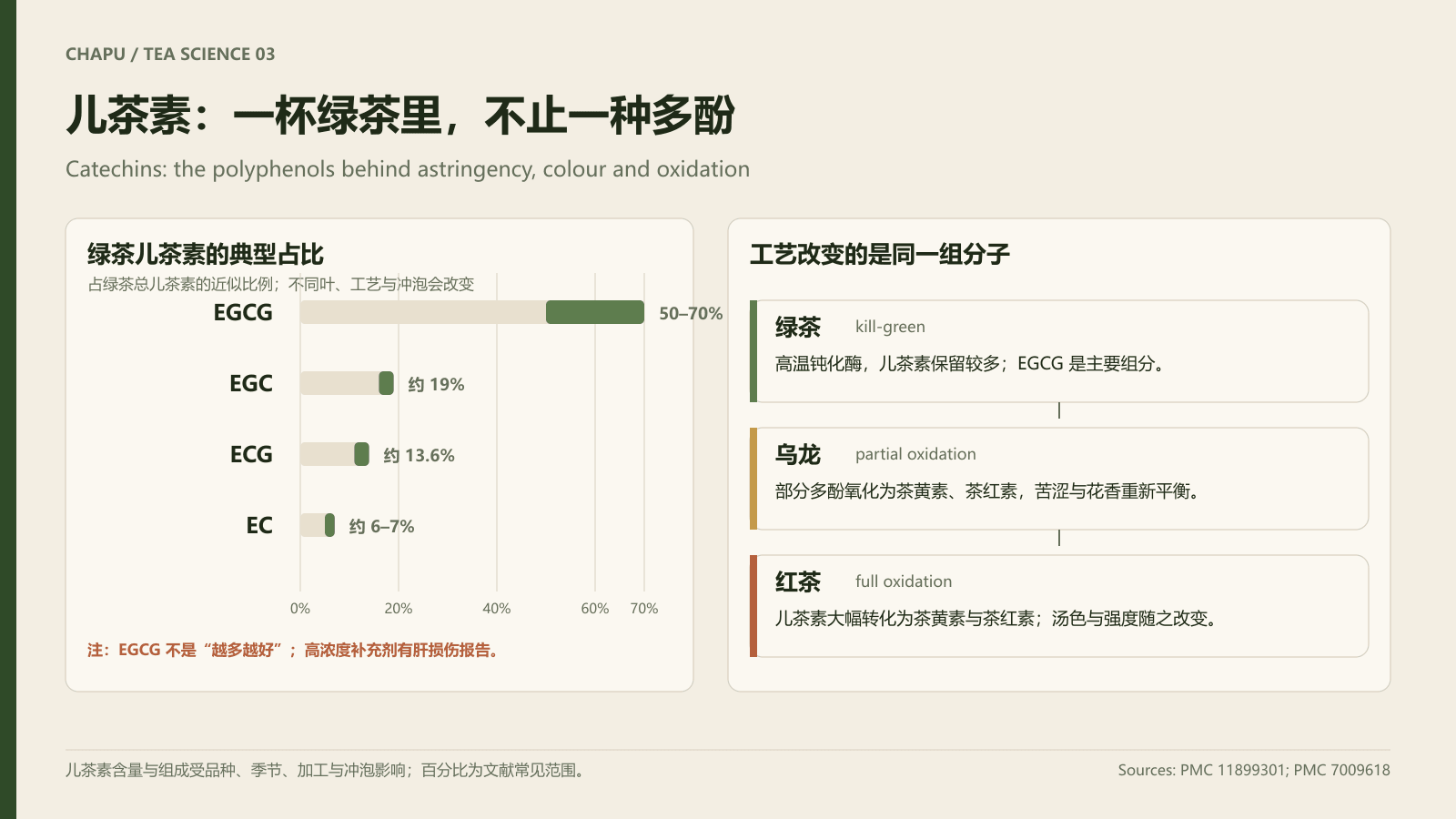
| Catechins (EGCG etc.) | Intestinal OATP uptake, P-gp efflux, CYP enzymes | Mostly in vitro/animal; human data limited to selected drugs |
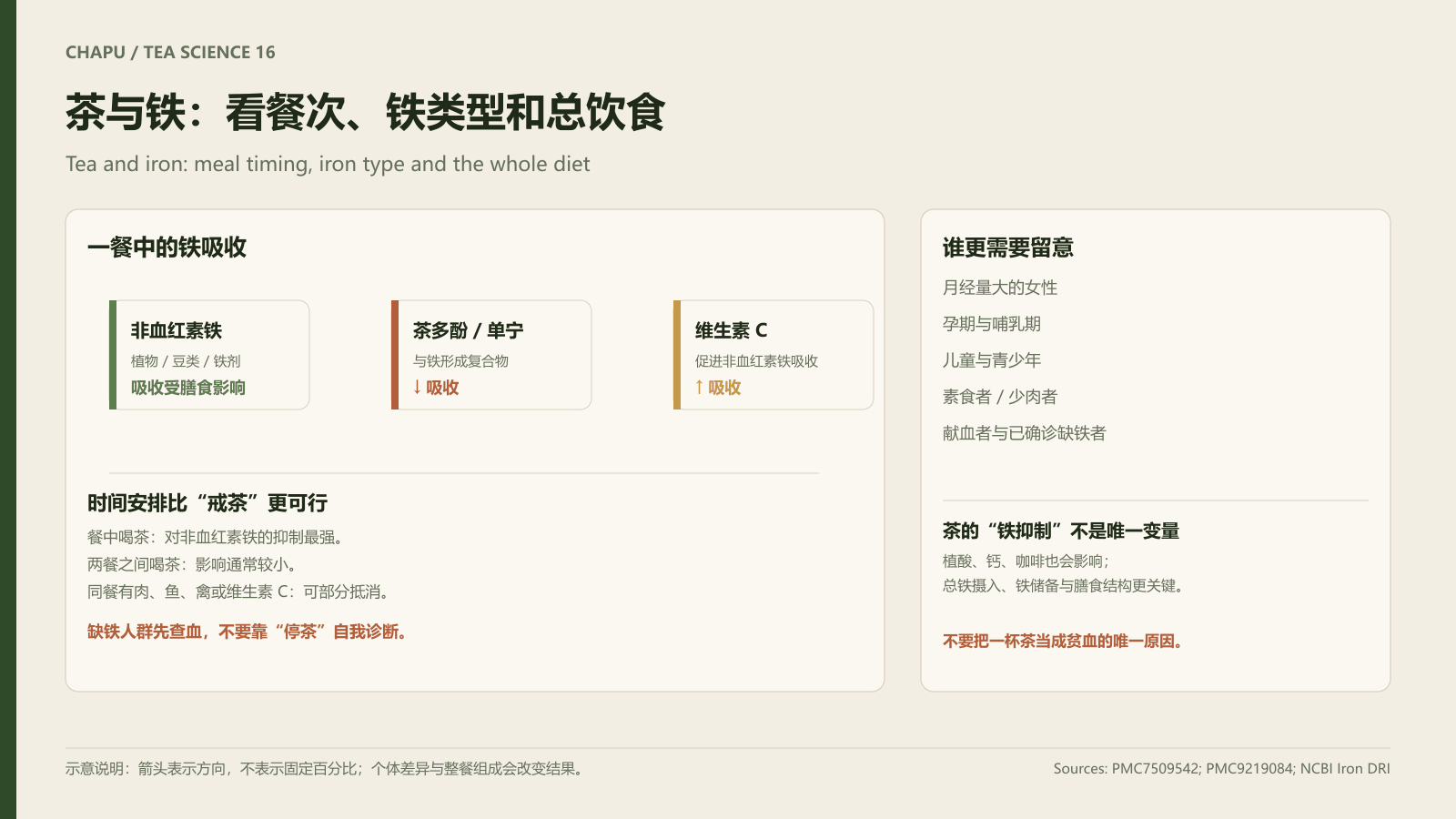
| Tannins / polyphenols | Iron, some alkaloids and drug absorption | Strongest human evidence is for iron |
| Vitamin K | Warfarin and other anticoagulants | Mainly relevant with large amounts of dry leaf or extracts |
The key variable is not the word “tea”. It is dose and form: one light cup, several strong cups daily, and a concentrated green tea extract are three different exposures. Most clinical interaction reports involve high-dose green tea extracts, not an ordinary cup.
Interactions with clinical evidence
1. Catechins can reduce absorption of some drugs. A 2025 review pooled clinical studies: 72% of analyses reported that green tea lowered systemic drug exposure by 18–99%, including atorvastatin, celiprolol, digoxin, fexofenadine, folic acid, lisinopril, nadolol, nintedanib, raloxifene and rosuvastatin. The proposed mechanisms are inhibition of intestinal OATP1A2, enhanced P-gp efflux or reduced drug solubility. In healthy volunteers given green tea for 14 days before nadolol, Cmax and AUC fell by about 85%.
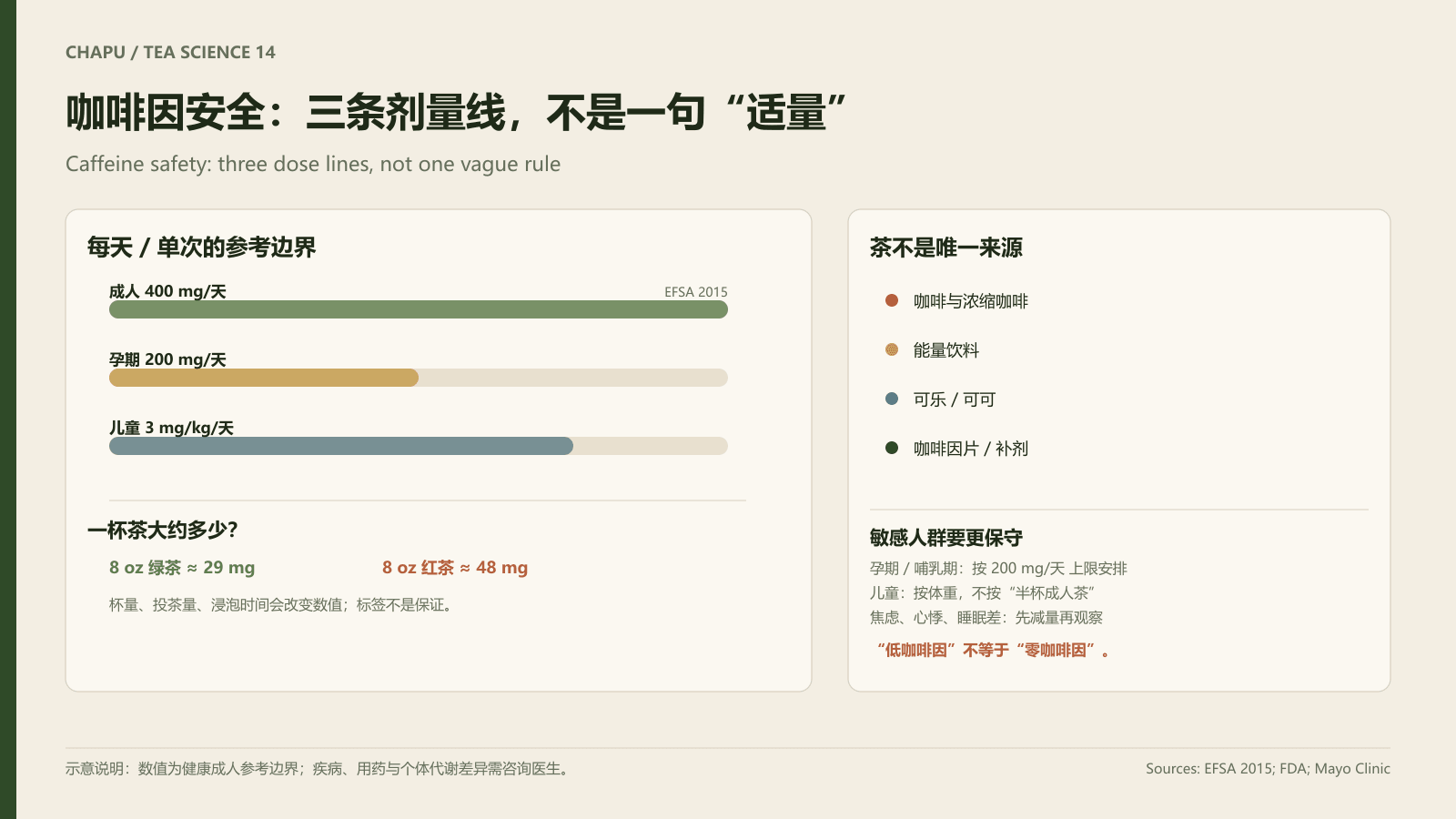
2. Caffeine adds to stimulants and heart-rate effects. Caffeine raises heart rate and disrupts sleep. Stacking tea, coffee, energy drinks and caffeine-containing medicines increases the risk of palpitations, tremor and insomnia. Some medicines slow caffeine clearance, making the effect last longer.
3. Warfarin and vitamin K. Large amounts of dry tea leaf or green tea extract can supply vitamin K and destabilise anticoagulation. An ordinary cup usually has limited impact, but tell your clinician about your tea habit.
4. Iron supplements and tannins. Tea polyphenols and tannins bind iron and mainly reduce non-haem iron absorption. Taking an iron supplement with strong tea is a poor combination; a 1–2 hour gap is more sensible.
5. Tea and some herbal products. Tannins can bind alkaloids and glycosides, but “tea cancels medicine” is too broad to replace a component-and-dose analysis.
How to read the strength of evidence
| Evidence type | What it can show | What it cannot show |
|---|---|---|
| In vitro transporter/enzyme assays | A compound may inhibit OATP, P-gp or CYP | Whether a cup reaches the same concentration in a person |
| Animal studies | Mechanism and direction | Human dose, absorption and long-term outcome |
| Small human pharmacokinetic trials | Exposure change for a specific drug and dose | That every patient and every tea behaves the same |
| Case reports | A possible clinical consequence | Causation or incidence |
| Guidelines / labels | Confirmed contraindications and cautions | That an unlisted interaction does not exist |
When you see “green tea reduced a drug by 85%”, ask: how many people, what dose, extract or brew, single dose or 14 days, and is the drug narrow-therapeutic-index? A pharmacokinetic trial does not automatically become “everyone must avoid tea”.
What to do in practice
- Do not take medicines with tea. Water is the simplest way to reduce risk.
- Separate timing. For susceptible drugs, leave 1–2 hours from strong tea or green tea extract; confirm with your clinician or pharmacist.
- Check the form and dose. Ordinary tea and high-dose green tea extract supplements are not the same risk category; check the EGCG content on the label.
- Be more cautious with narrow therapeutic index drugs. Warfarin, digoxin, antiepileptics, immunosuppressants and some anticancer drugs: any change in diet or supplements should be reported.
- Track changes. If efficacy drops, bleeding, palpitations or insomnia appear after starting or stopping several strong cups or a green tea extract, seek review.
Source boundary
This page can establish: green tea catechins can lower systemic exposure of some drugs in humans, through OATP, P-gp and solubility mechanisms; caffeine can interact with stimulants, heart-rate medicines and metabolising enzymes; tannins affect iron absorption; warfarin and vitamin K require disclosure to the clinician.
This page cannot establish: an individual interaction between one tea and one medicine; that a light cup will always have a clinical effect; that every report equals a contraindication. Prescription choice, dose adjustment and stopping a medicine must be decided by a clinician or pharmacist who knows the drug, dose, liver and kidney function and other medicines. Do not stop or change a medicine on your own.