Tea polyphenols can scavenge free radicals in a test tube. That is real. “Drinking this cup protects your DNA, proteins and lipids” is a different proposition. The first is a chemical property in a model system; the second needs human studies, appropriate endpoints and an attributable effect. Regulators draw this line clearly; marketing often erases it.
Three different levels
| Level | Common measures | What it can show |
|---|---|---|
| In vitro chemistry | Radical-scavenging rate, ORAC, FRAP, TEAC | A extract's ability to react with oxidants in a tube |
| Human biomarkers | Plasma total antioxidant capacity, oxidised LDL, F2-isoprostanes | Whether selected markers change after intake |
| Human health outcomes | Disease incidence, mortality, clinical endpoints | Whether health outcomes actually change |
Jumping from the first to the third is the classic logic leap. Tea polyphenol concentrations in a tube can far exceed what reaches blood and tissue after a cup; the oxidants generated in a tube may not be the main pathway in the body.
EFSA's boundary
EFSA's 2018 guidance states: a claim based on in vitro radical-scavenging capacity describes only a property in a model system and cannot demonstrate a human benefit. Changes in plasma total antioxidant capacity (TRAP, TEAC, FRAP, ORAC, FOX) are also not accepted as evidence of a beneficial physiological effect.
EFSA's 2010 tea evaluation is more specific: claims that tea, green tea catechins and black tea tannins protect DNA, proteins and lipids from oxidative damage were not substantiated because appropriate human endpoints and studies were lacking. This does not mean tea has no value; it means “antioxidant” cannot be used as a substantiated health claim.
Why ORAC is not a league table
ORAC (oxygen radical absorbance capacity) is an in vitro index. USDA maintained an ORAC database and withdrew it in 2012 because the index lacked evidence for a human biological effect. Treating “this tea's ORAC is high” as “drinking it slows ageing” translates a test-tube reaction into a human outcome.
ORAC values also vary with extraction method, sample source and batch. “High-ORAC tea” rankings from different laboratories often contradict each other because they are not measuring the same thing.
What tea polyphenols can reasonably say
Safer wording:
- Tea polyphenols scavenge free radicals and modulate oxidative-stress pathways in laboratory and animal studies;
- these mechanisms are research leads, not proof of a human health effect;
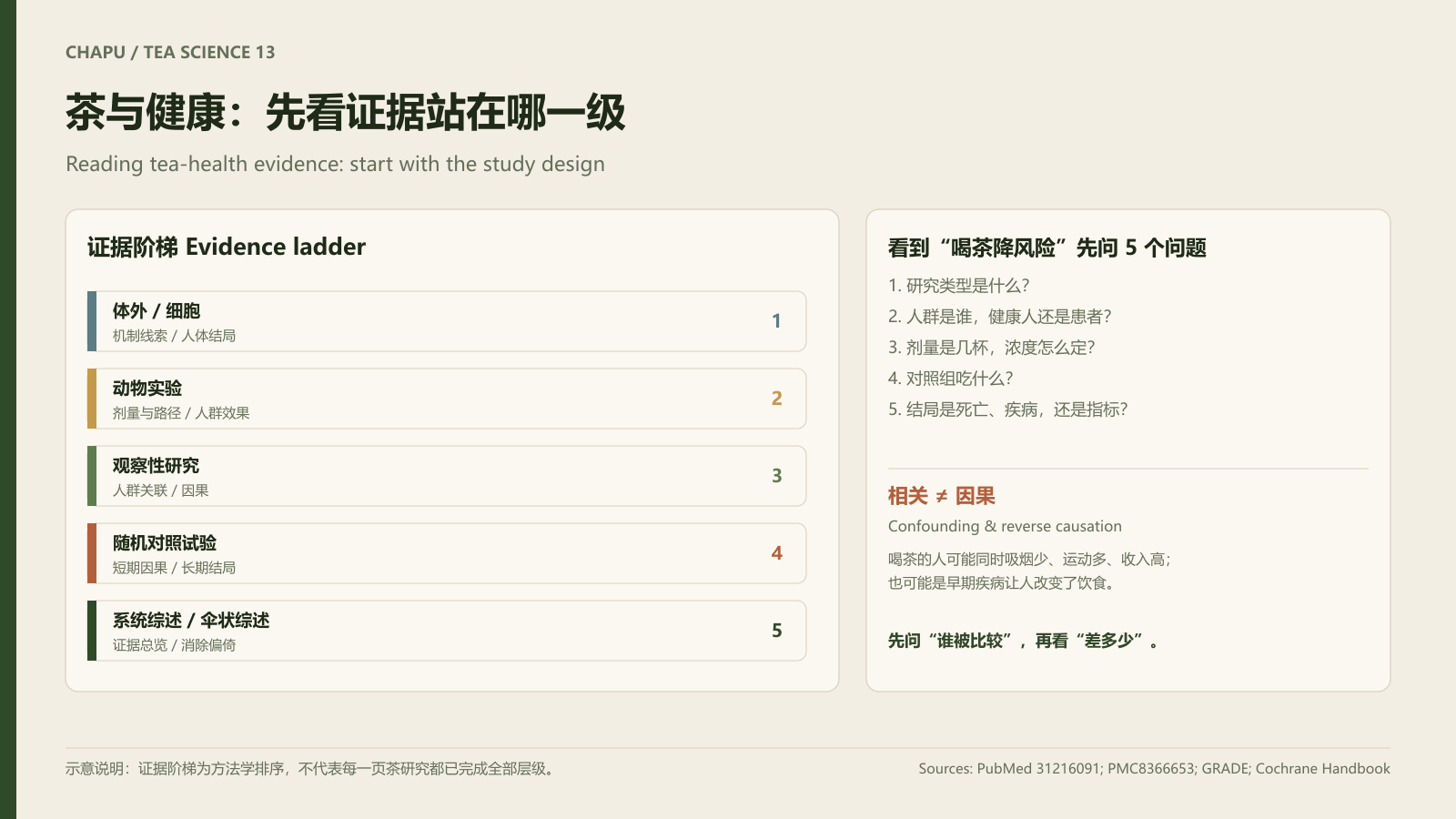
- observational associations between tea drinking and lower risk do not prove causation;
- claims such as “anti-cancer, anti-ageing, detox, DNA repair” exceed the current evidence.
This is not an attack on tea. Tea can taste good, wake you up and be part of daily life. “One cup protects your cells” is simply a claim regulators require to be handled with care.
Reading labels and copy
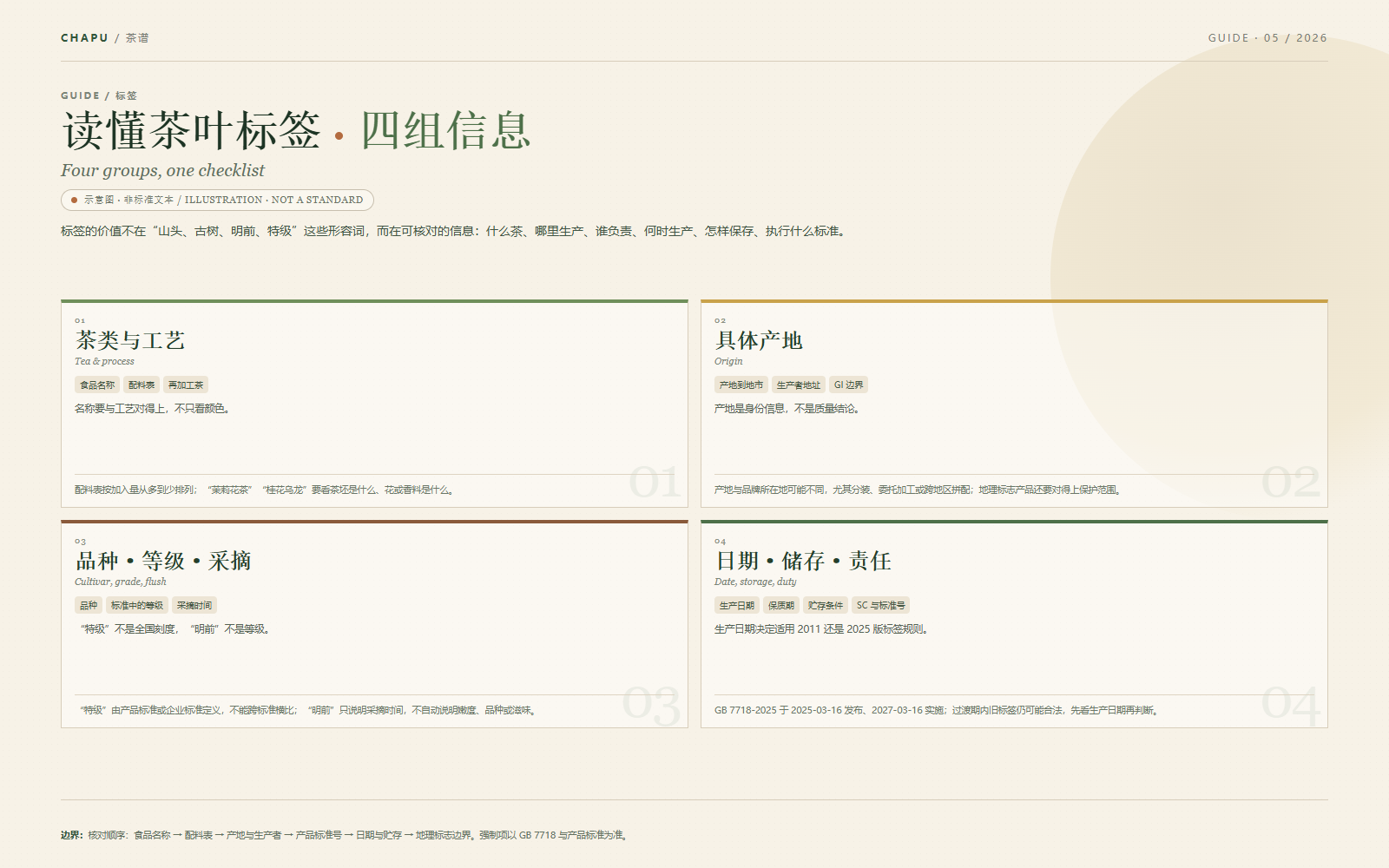
- Watch the verb. “Contains tea polyphenols” is a composition statement; “scavenges free radicals and protects cells” is a health claim requiring evidence and regulatory grounds.
- Check the evidence type. Test-tube data, ORAC numbers and animal studies alone cannot support a human health conclusion.
- Check attribution. Is the claimed effect from tea itself, or from added vitamins, minerals or other ingredients?
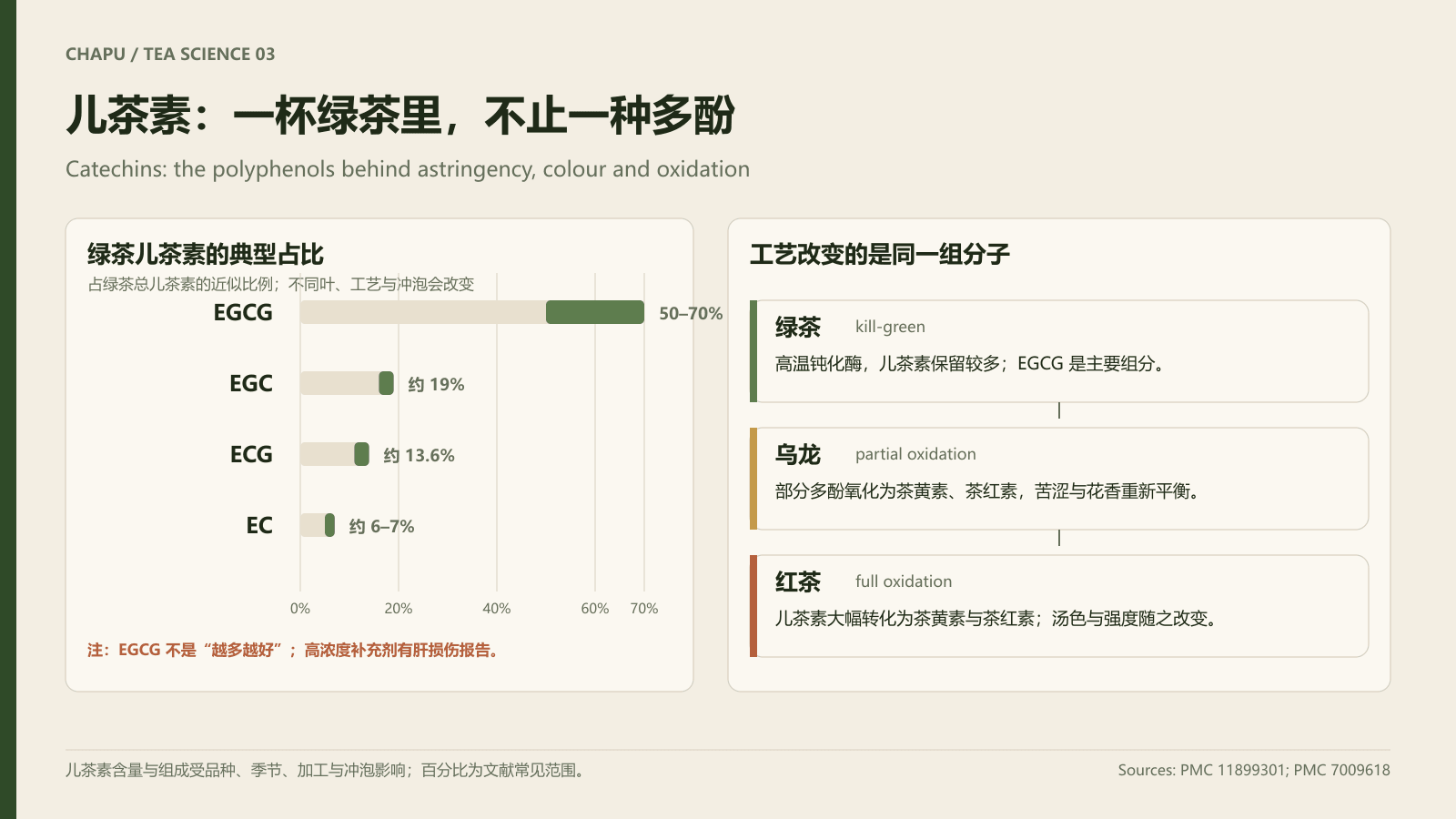
- Check population and dose. A cup, a tea extract supplement and concentrated EGCG are different exposures.
- Check the jurisdiction. China, the EU and the US allow different health claims; cross-border copy is not automatically compliant.
Common phrases
| Phrase | Problem | More defensible wording |
|---|---|---|
| “ORAC value is sky-high, antioxidant number one” | In vitro index cannot rank human effects | “High radical-scavenging capacity in vitro” |
| “Tea fights ageing” | Ageing is multifactorial; evidence insufficient | “Tea polyphenols affect oxidative-stress pathways in experimental systems” |
| “Clears free radicals, detoxes and beautifies” | “Detox” is undefined; the body has its own antioxidant system | “As part of the diet, tea provides polyphenols” |
| “Green tea prevents cancer” | Observational association is not causation | “Observational studies show associations; more research is needed” |
| “Stronger tea means more antioxidant effect” | Concentration and human absorption are not linear | “Higher concentration does not equal a higher human effect” |
Source boundary
This page can establish: in vitro radical scavenging and human health effects are different levels; EFSA does not accept in vitro indices or plasma total antioxidant capacity alone as support for health claims; tea polyphenol claims on protecting DNA, proteins and lipids were not substantiated by EFSA; the ORAC database was withdrawn in 2012.
This page cannot establish: the specific human effect of a particular tea; that all tea polyphenol research is invalid; whether future evidence will change. Product claims should be reviewed under the selling market's rules; treat “anti-cancer, anti-ageing, detox, DNA repair” as marketing, not established conclusion.