Extent
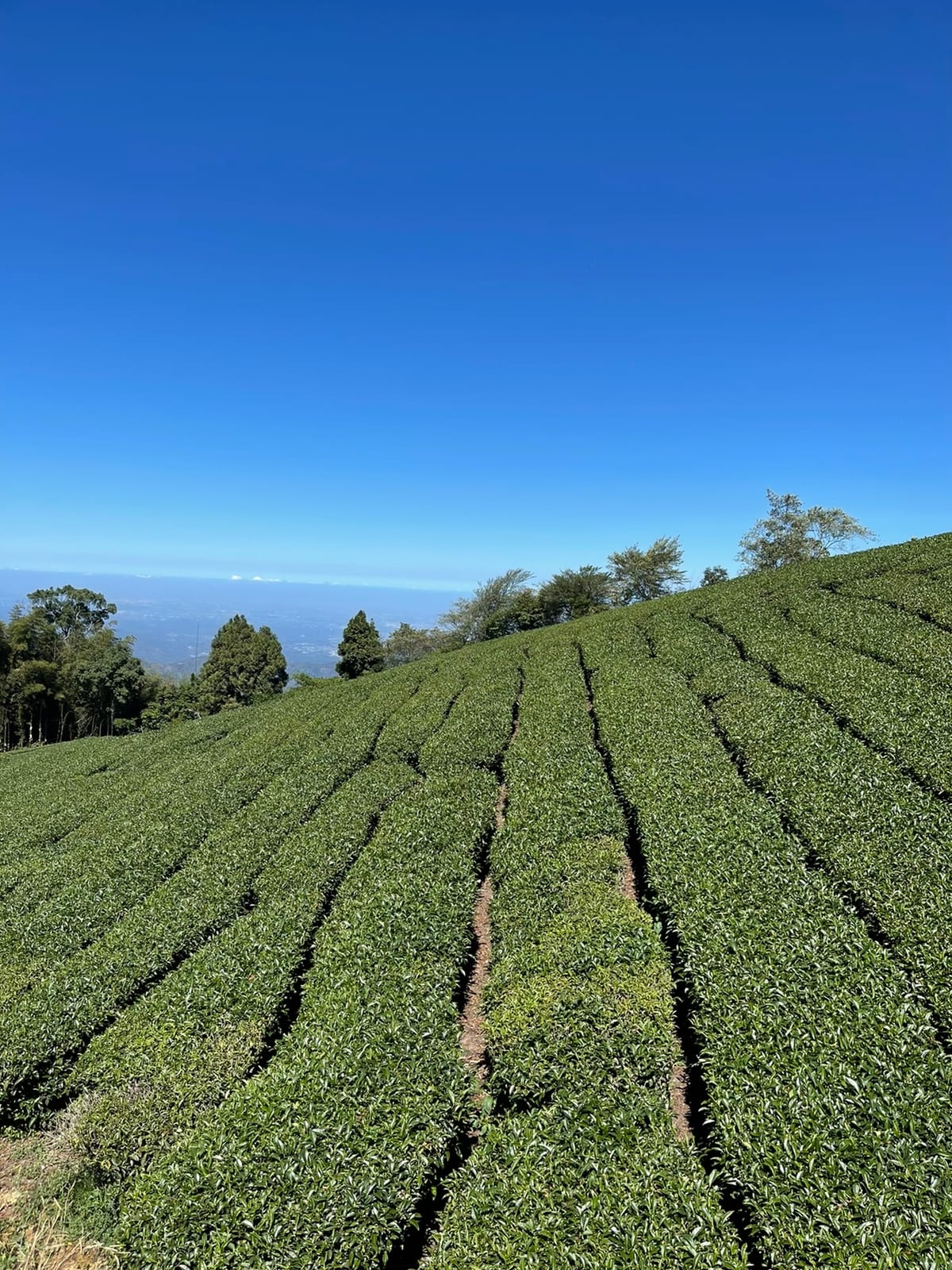
Alishan lies in Chiayi County, Taiwan, and is a representative high-mountain oolong area. Gardens are spread on slopes roughly 1,000–1,700 metres above sea level; Shizhuo, Xiding and Taihe are often cited as different sub-areas. Alishan is a broad place name; garden elevation, cultivar and management vary, so “Alishan tea” is not one product.
Environment
High elevation, mist, day–night temperature differences and well-drained slopes slow leaf growth and make the leaf softer. High mountain is not automatically high quality: cultivar, picking, shaking and roasting matter just as much. Lower-elevation gardens can also produce light-aroma oolong with appropriate processing; elevation is one environmental factor.
Cultivars and processing
Common cultivars include Qingxin oolong and Jinxuan, usually made into lightly oxidised, lightly roasted ball-shaped oolong. Shaking develops floral notes, rolling and lump rolling shape the pellets, and drying and light roasting stabilise aroma. Farmers vary oxidation, rolling pressure and roasting temperature; light aroma does not mean no processing character.
Quality and flavour
Dry tea is ball-shaped, emerald to dark green. Liquor is golden to pale yellow, with floral, creamy or fruity notes, a sweet, smooth taste and low bitterness. Jinxuan often shows a creamy note, but this is not an absolute cultivar marker and may come from processing or additives. Qingxin oolong more often emphasises floral and site character.
History and boundaries
Taiwan’s high-mountain tea developed with domestic demand in the late twentieth century. Alishan, Lishan and Shanlinxi are known for light-aroma ball-shaped oolong, while Dongding and Wenshan Baozhong represent other historical styles. Specific development dates, volumes and award stories need local tea-industry archives.
Common misconceptions
- High mountain is not a quality guarantee. Elevation is one factor; processing and storage matter.
- Not all Alishan tea is Qingxin oolong. Jinxuan and other cultivars are also used.
- A creamy note is not always Jinxuan. It may come from processing or additives; check the label and aroma.
- Light aroma is not “no roasting”. It usually means light roasting to preserve floral and fresh notes.
Representative teas
- Dongding oolong: the traditional oolong of Lugu, Nantou.
- Wenshan Baozhong: a lightly oxidised strip-shaped oolong from Wenshan, Taipei.
Sources
- Tea and Beverage Research Station (TBRS), Ministry of Agriculture — Official site of the Tea and Beverage Research Station under Taiwan’s Ministry of Agriculture (reorganized from TRES in 2023). Used as an entry point for tea areas, cultivars and processing research.