What it is
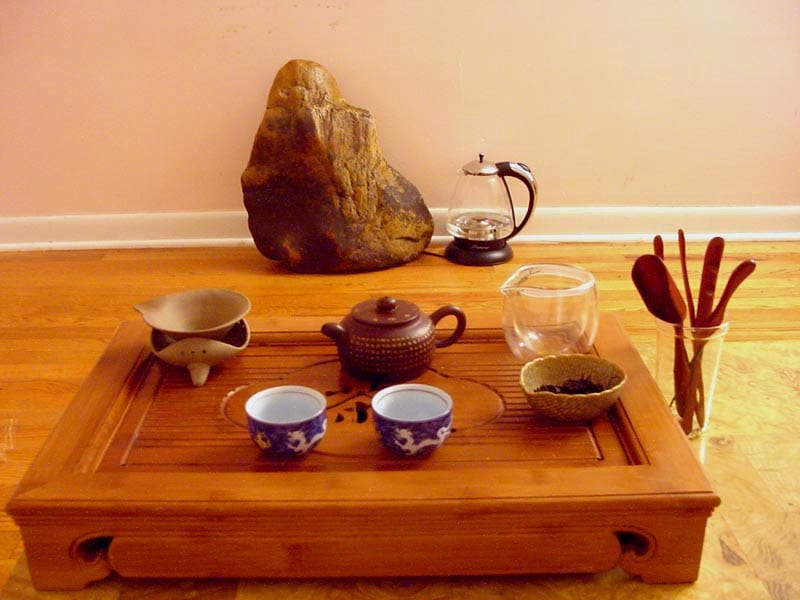
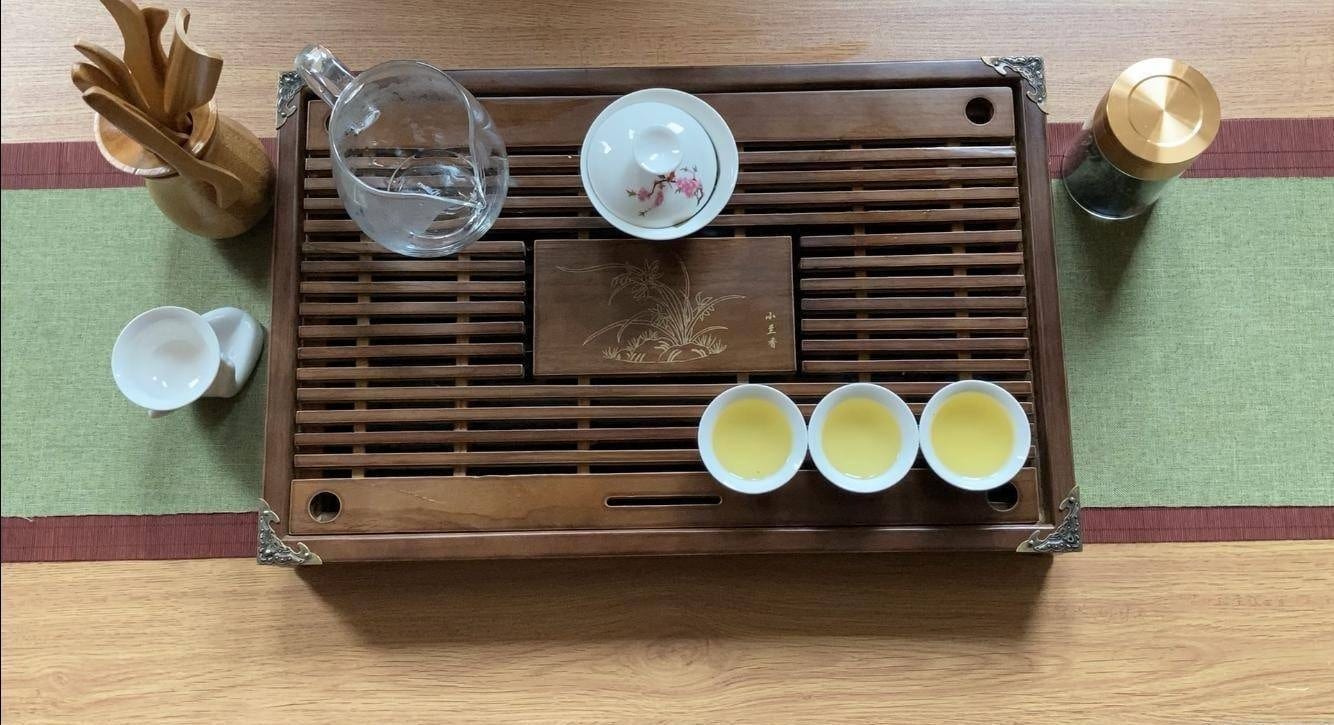
Gongfu brewing emphasises vessels, hand technique and repeated short infusions. It commonly uses a small pot or gaiwan, a relatively high leaf-to-water ratio and small tasting cups. The aim is to watch aroma and flavour change across infusions. It is not the only refined way to brew tea, nor does it require a complicated ritual; the core is controlling concentration and sharing the tea.
Basic sequence
- Warm the gaiwan or pot, the pitcher and the cups with hot water.
- Add leaf according to vessel size and tea type; gongfu brewing is usually stronger than a large mug infusion.
- Rinse if appropriate. Not every tea needs a rinse.
- Pour a short infusion and decant promptly to avoid over-steeping.
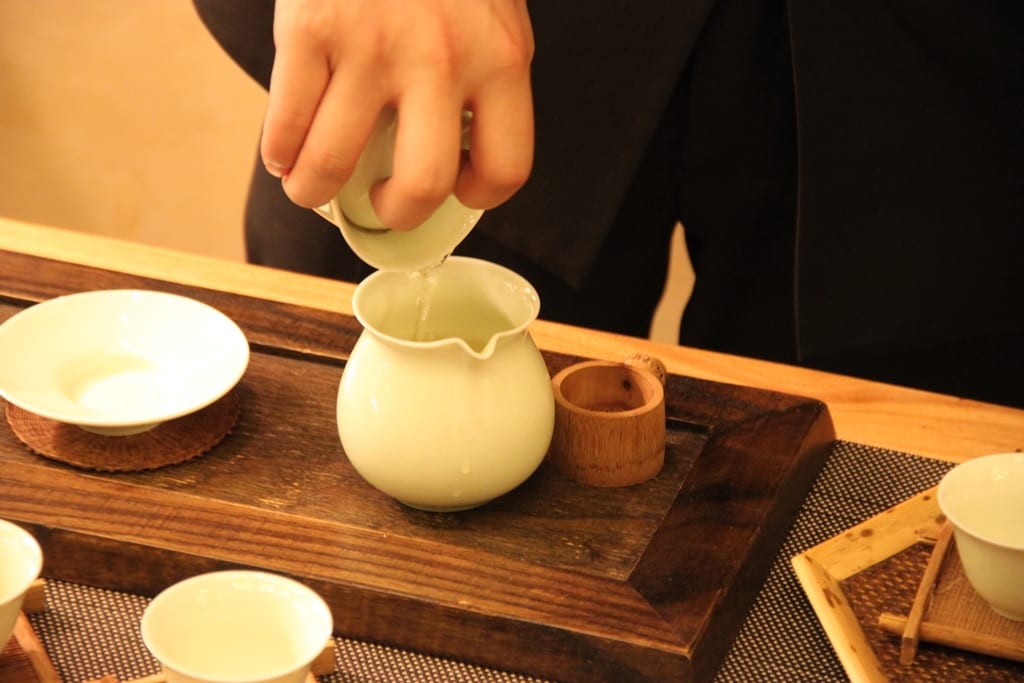
- Pour into a pitcher to mix the liquor, then divide among the cups.
- Re-infuse, adjusting time according to aroma, taste and colour; later infusions are usually longer.
Parameters
Leaf ratio, water temperature and infusion time are the three main variables. A high leaf ratio requires fast decanting. Coarse, compressed or aged tea can take hotter water and longer contact; fine green tea may not suit a high leaf ratio and long infusion. Do not rely on a fixed number of seconds. Taste the liquor and inspect the leaf, then adjust the next infusion.
Vessels
A gaiwan makes the leaf easy to observe and decant; a small pot holds heat better; a pitcher evens out the liquor; small cups suit tasting. More equipment is not automatically better. Choose vessels that are comfortable, appropriately sized and easy to clean.
Common misconceptions
- Is gongfu brewing the same as “kung fu tea”? The common Chinese term is gongfu cha, referring to time and skill, not martial arts.
- Does more leaf always mean better tea? No. Too much leaf increases bitterness and waste.
- Should every infusion use the same time? No. Adjust according to the tea and infusion number.
- Do you need a complicated setup? No. A gaiwan and a pitcher are enough for a basic gongfu-style infusion.
Sources
- GB/T 23776-2018 Tea sensory evaluation method — Reference for tasting conditions and sensory records.
This page is an AI-edited translation based on the reviewed Chinese source. It is not a human-expert endorsement.